Top 15 Antarctic Animals You Can See on an Antarctica Cruise
Discover the top 15 Antarctic animals you can see on an Antarctica cruise, from emperor penguins and orcas to leopard seals, albatrosses and more.
 Antarctica may be a land of ice and extremes, but it’s anything but empty. The White Continent and the surrounding Southern Ocean host some of the most remarkable wildlife on Earth — animals so well-adapted to life in the cold that they make winter survival look like a quirky hobby. Whether you’re joining an Antarctic cruise or simply a wildlife fan who enjoys penguins a little too much, here are the top 15 animals you can spot across Antarctica and the sub-Antarctic islands:
15. Snow Petrel
Pure white, delicate and determined, the snow petrel is the unofficial “spirit bird” of Antarctica. These birds nest on cliffs surrounded by glaciers, glide effortlessly through blizzards, and somehow always look immaculate — the opposite of most expeditioners after a day in zodiac spray.
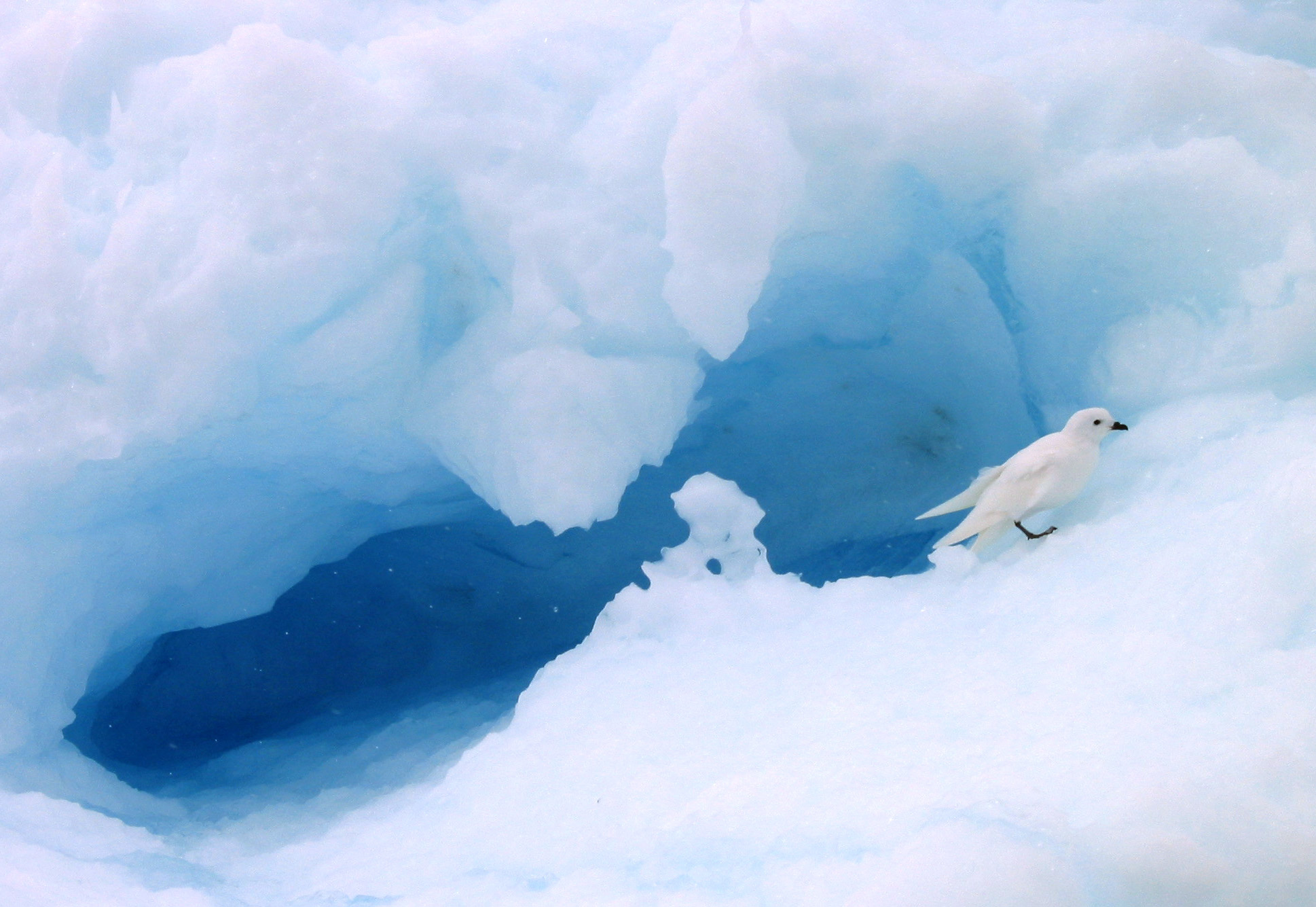
- They are one of only three birds that breed exclusively in Antarctica, nesting on remote cliff ledges surrounded by glaciers and sea ice.
- With their pure white plumage and jet-black eyes, they are often considered the most beautiful birds in the Antarctic — and look improbably clean despite living in a land of wind-blown ice.
- Expert fliers, snow petrels can glide effortlessly through strong polar winds and are often spotted far out at sea, foraging for fish, squid, and carrion along the ice edge.
14. Antarctic Krill
Tiny, shrimp-like and surprisingly charismatic (once you realise everything eats them), krill are the engine of the Antarctic ecosystem. Penguins, seals, whales — you name it, they rely on krill. One might say krill are the true celebrities of the Southern Ocean… just very, very small ones.
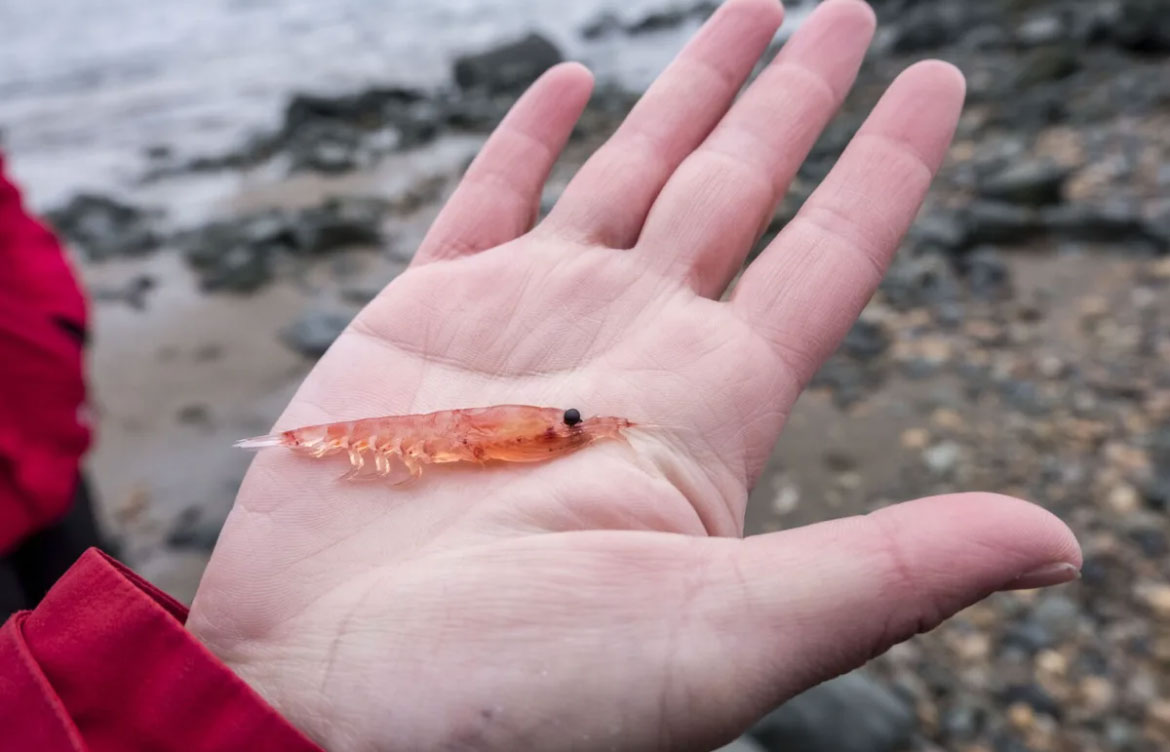
- They’re the foundation of the entire Antarctic food web, feeding everything from penguins and seals to whales and seabirds — making them one of the most ecologically important species on the planet.
- Despite being only about 5–6 cm long, Antarctic krill form enormous swarms that can stretch for kilometres and contain millions of individuals, visible even from space.
- They have a remarkable adaptation: krill can shrink in size and delay reproduction during years with poor food availability, helping them survive the boom-and-bust cycles of the Southern Ocean.
13. King Penguin
While not found on the Antarctic continent itself, King Penguins rule the sub-Antarctic islands with aristocratic flair. Tall, elegant and decked out in golden feathers, they stand in huge colonies that look like nature’s version of a black-tie gala.

- Second only to emperor penguins in size, king penguins stand about 90 cm tall and are instantly recognisable by their striking orange-gold neck patches and sleek silver backs.
- They form massive colonies on sub-Antarctic islands, sometimes numbering in the hundreds of thousands — creating a soundscape of calls, trumpets, and constant penguin bustle.
- King penguins have an unusual breeding cycle: it takes more than a year to raise a single chick, meaning pairs typically breed only twice every three years, with chicks enduring long winters in crèches while parents forage far at sea.
12. Macaroni Penguin
Recognisable by their flamboyant yellow “eyebrow” crests, macaroni penguins are the rockstars of the penguin world. They look permanently surprised, slightly chaotic, and absolutely fabulous — all while surviving some of the roughest seas on Earth.
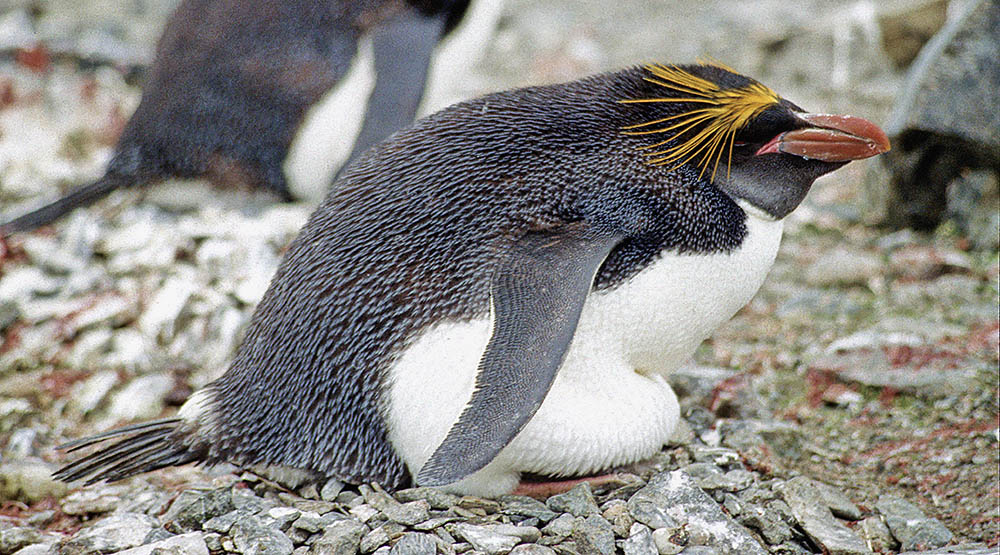
- Instantly recognisable by their wild yellow-orange crest feathers, macaroni penguins look like they’re permanently ready for a rock concert — a splash of flamboyance in the icy sub-Antarctic.
- They are one of the most numerous penguin species on Earth, forming huge, noisy colonies on steep, rocky slopes where their impressive climbing skills are on full display.
- Macaronis are krill specialists, diving hundreds of times per day to hunt, and their energetic lifestyle makes them some of the most athletic (and chaotic) penguins in the region.
11. Albatross (Various Species)
With wingspans stretching up to 3.5 metres, albatrosses are the undisputed kings of the wind. They spend years at sea without touching land, effortlessly gliding for hundreds of kilometres. If birds could give life advice, albatrosses would simply say: “Relax — go with the airflow.”

- Masters of the wind, albatrosses have the largest wingspans of any bird — up to 3.5 metres — allowing them to glide for hours or even days with barely a flap.
- They spend the vast majority of their lives at sea, sometimes going years without touching land, and only return to isolated islands to breed.
- Albatross pairs often form lifelong bonds, performing elaborate courtship dances with bill clacking, bowing, and coordinated calls — the most graceful awkward dancing you’ll ever see.
Drumroll... now for our Top TEN...
10. Adélie Penguins
Small, round and perpetually busy, Adélie penguins form huge colonies where the noise level rivals a rock concert. These classic “tuxedo penguins” are endlessly entertaining — waddling, bickering, pebble-stealing, and generally acting like tiny feathered sitcom characters.
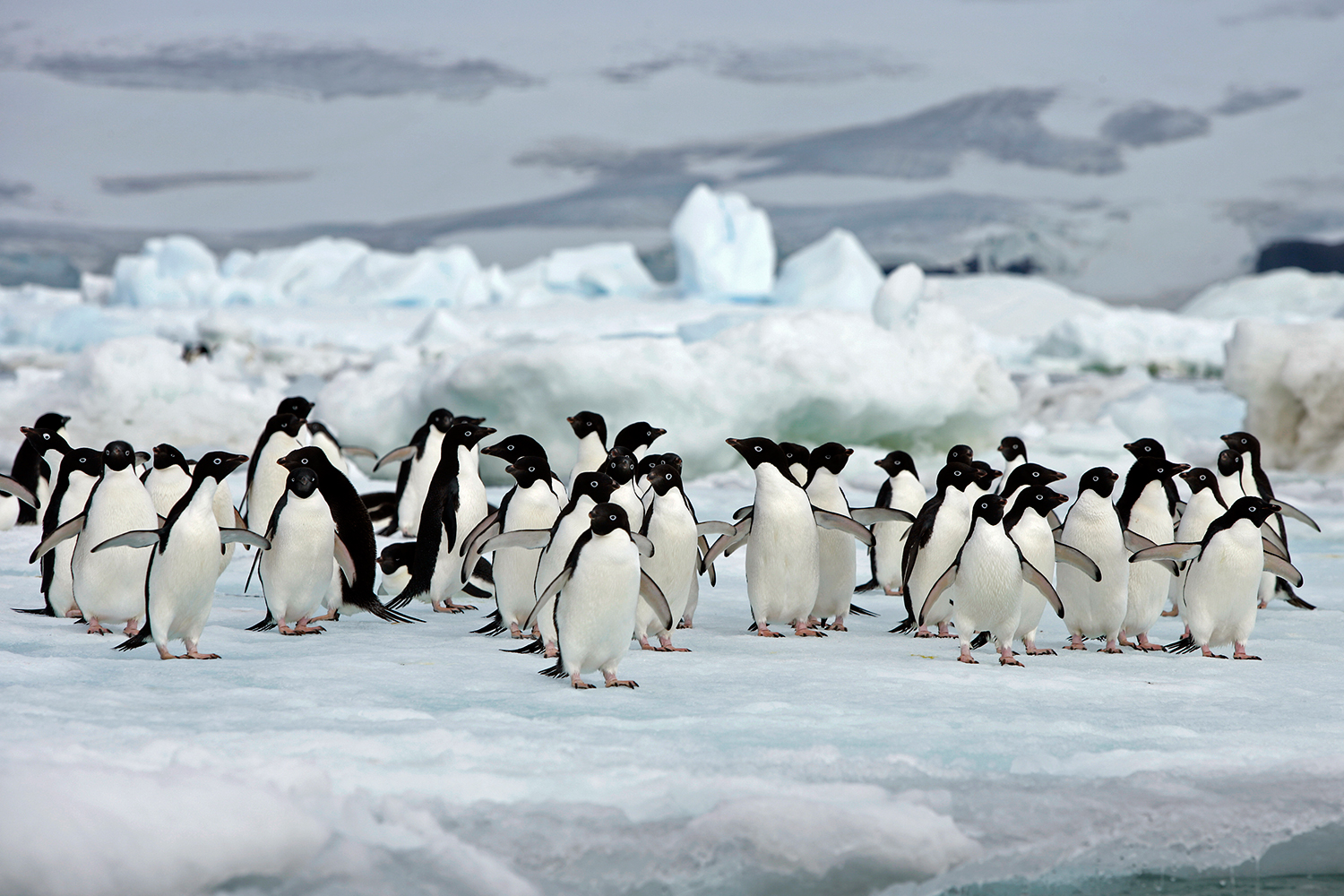
- Small but mighty — Adélies weigh around 5 kg and stand under a metre tall.
- Come summertime, they gather in massive, raucous rookeries — thousands (even hundreds of thousands) of birds roosting, squawking, and nesting on pebble mounds.
- Both parents share childcare duties and band together to raise adorable chicks hopping onto their feet before they’re ready to brave the icy seas.
- Spotting Adélie penguins is like visiting one of nature’s busiest, feather-covered cities — chaotic, charming, and unforgettable.
9. Chinstrap Penguins
Named for the neat black line under their chin, these penguins look like they’re wearing tiny bicycle helmets. They are loud, energetic and excellent climbers of steep volcanic slopes. Chinstraps are proof that style and stamina can absolutely coexist.
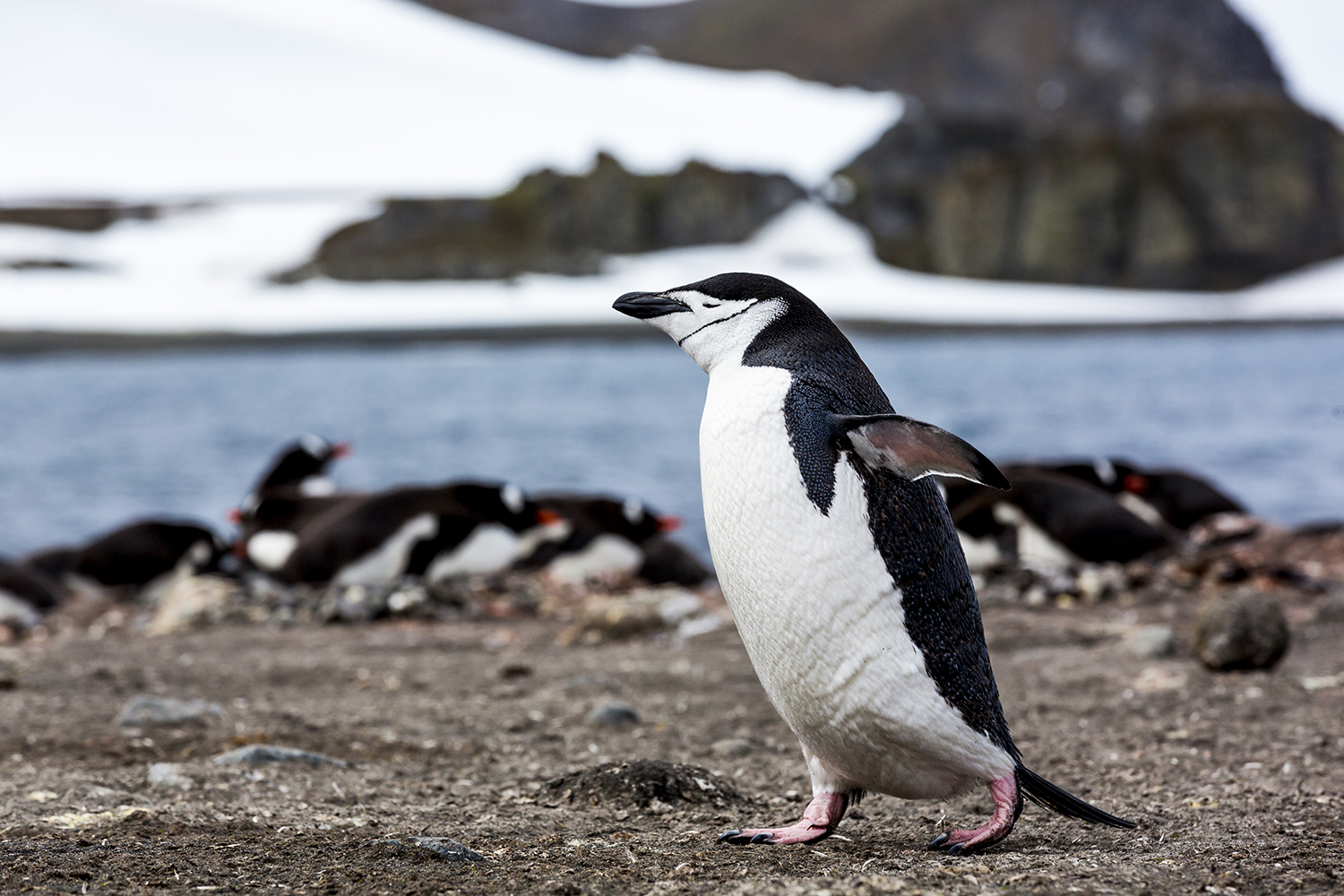
- Named for that distinctive black line under their chin — as if they’re wearing the world’s tiniest penguin helmet strap.
- Chinstraps are agile swimmers, diving offshore to feed on krill, shrimp and squid. Their waterproof feathers and fat insulation keep them toasty in freezing seas.
- Their mating season is a spectacle: males gather pebbles to build nests, while occasional pebble-stealing by rivals adds drama — like a penguin version of a soap opera.
- You’re most likely to spot them along rocky coasts — especially on sub-Antarctic islands and the northern reaches of the Antarctic Peninsula.
8. Leopard Seals
Sleek, spotted and equipped with jaws that would make a dinosaur proud, the leopard seal is one of Antarctica’s top predators. They patrol the edges of ice floes, popping up like giant aquatic cats with an attitude. Watching one glide underwater is both beautiful and slightly intimidating.

- Leopard seals — named for their beautiful spotted coats — are among Antarctica’s top predators. They cruise near ice edges waiting for unsuspecting penguins diving for fish.
- These sleek marine hunters can reach up to roughly 3.5–3.8 meters long, weighing 300–500 kg — built for power, stealth and icy-water aerobatics.
- Despite their formidable reputation, leopard seals are solitary by nature; each is more “lone wolf of the ice” than pack predator.
- Spotting one is a heart-pounding moment — especially if you’ve just watched a penguin disappear beneath the ice.
7. Weddell Seals
Weddell seals are the chilled-out introverts of the Antarctic. They spend their days snoozing on the ice, diving beneath it for fish, and maintaining breathing holes using their teeth (which, frankly, is more commitment than most of us show to home maintenance).
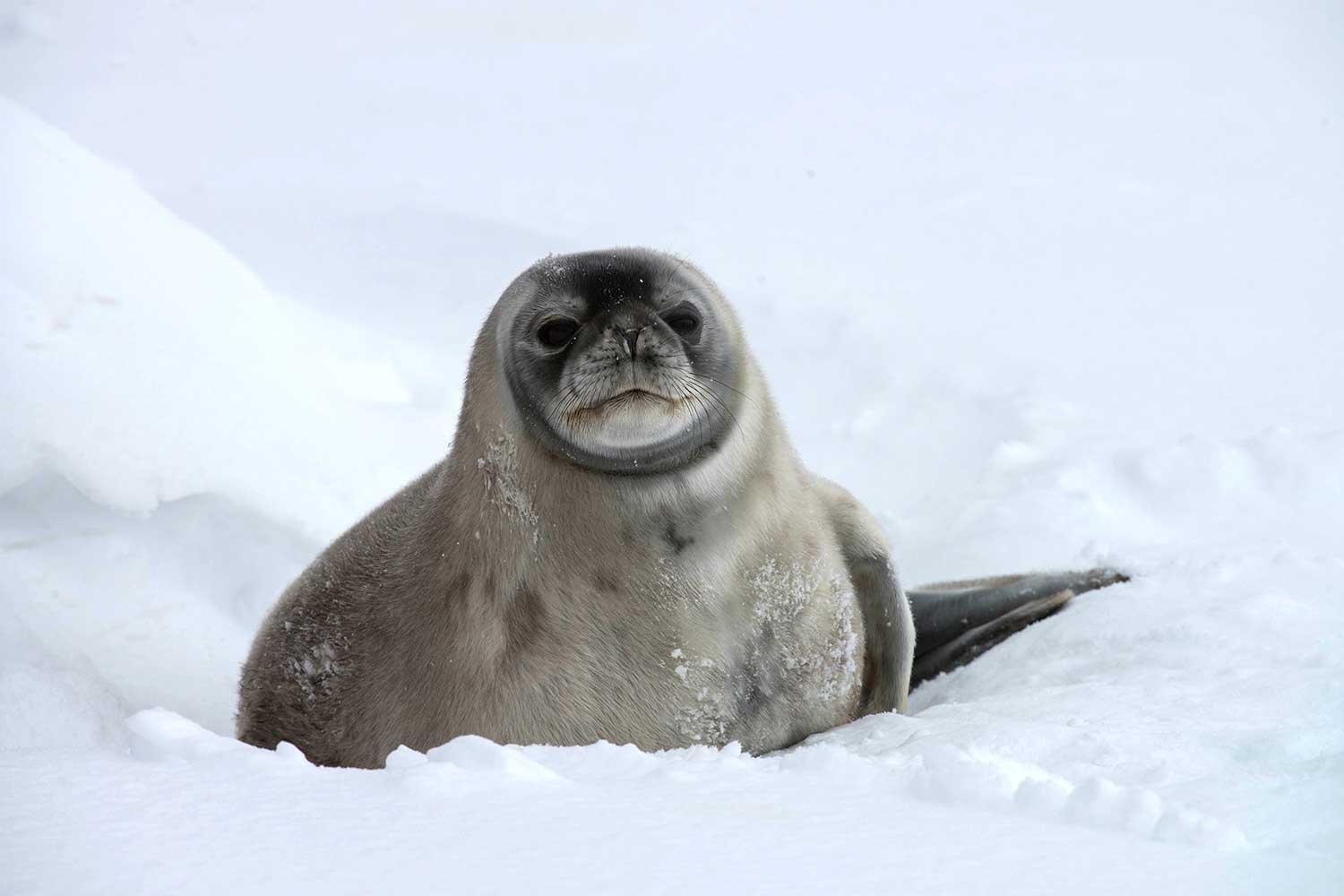
- Weddell seals are master divers: they can plunge to nearly 600 meters and stay underwater for up to an hour, often navigating beneath thick Antarctic ice.
- They carve and maintain breathing holes in the ice — using their teeth to chip away ice and keep crucial access to the surface.
- Their whiskers are sensory super-tools, detecting subtle vibrations of fish swimming nearby — a useful adaptation when light is scarce under the ice.
- Like all Antarctic seals, their fate is tightly linked to sea-ice conditions — a reminder of how fragile this icy paradise really is.
6. Crabeater Seal
Despite the name, crabeater seals eat no crabs whatsoever — just krill. Fortunately, they’re extremely efficient at it and are one of the most abundant seal species in the world. Sleek, pale and gentle-faced, they are a common sight resting on ice floes.
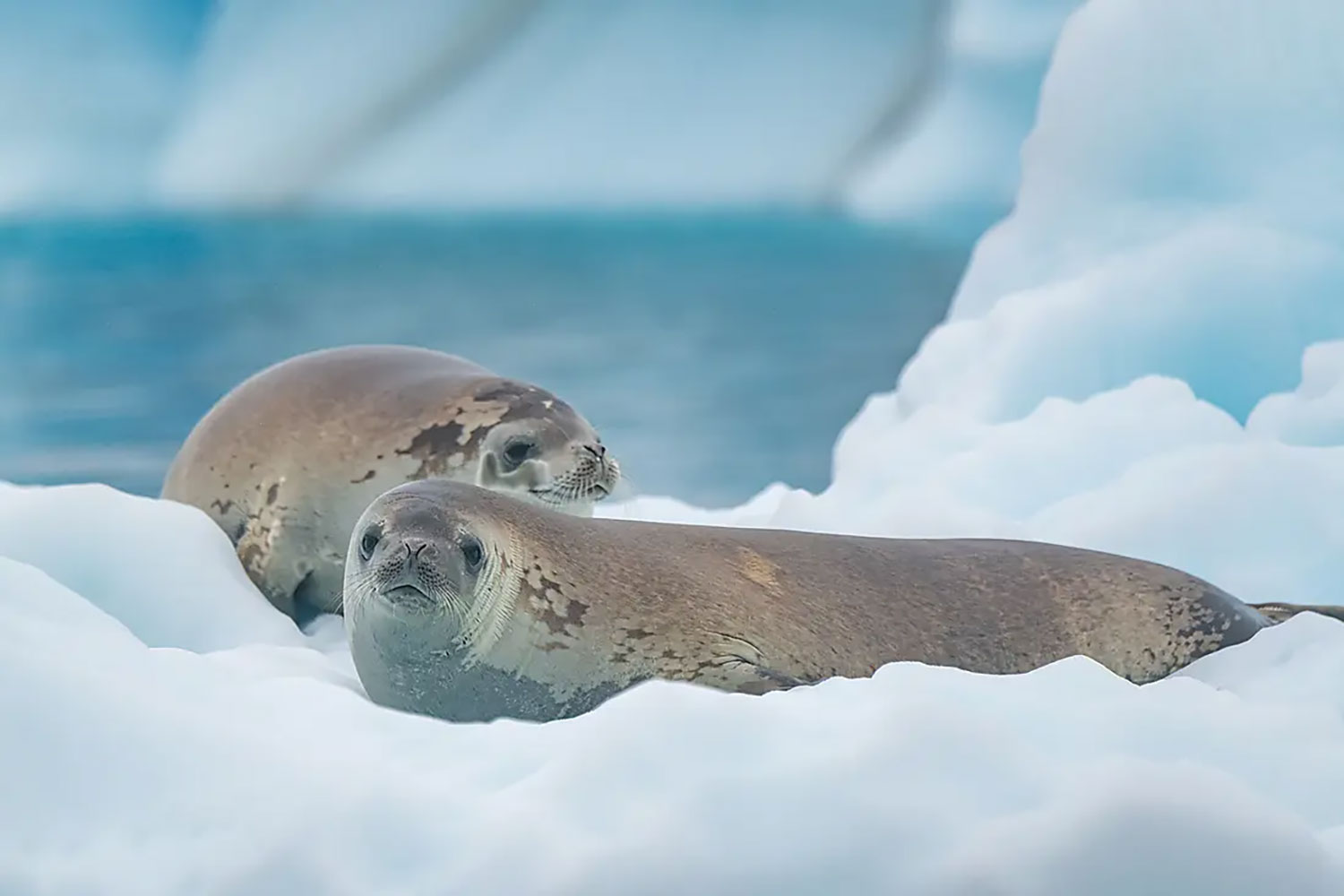
- They don’t eat crabs — despite the misleading name, their specialised sieve-like teeth are designed for filtering krill, which makes up the vast majority of their diet.
- They’re one of the most abundant large mammals on Earth, with an estimated 7–15 million individuals living around the Antarctic pack ice.
- Light-coloured and streamlined, crabeater seals spend much of their time hauled out on ice floes, using their powerful foreflippers and serpentine bodies to slither across the ice with surprising speed.
5. Blue Whale
The largest animal to ever exist — yes, bigger than dinosaurs — visits Antarctic waters to feast on krill. Seeing a blue whale is a life-altering moment: a sudden, awe-inspiring blow of mist followed by a massive back rolling across the water like a moving island.

- The largest animal on Earth — the blue whale — cruises the icy Southern Ocean, often near Antarctica when the seas teem with fish and krill.
- At up to ~30 meters long and weighing around 200 tonnes, seeing a blue whale’s spout or dorsal fin breach is a humbling, awe-inspiring moment.
- Their presence highlights the hidden richness of Antarctic waters — a stark contrast to the barren “landscape” many people imagine when they think of the continent.
4. Minke Whale (Antarctic Minke)
Small, streamlined and curious, minke whales often surface near zodiacs as if trying to figure out what tourists are doing in their ocean. They’re fast, elusive and occasionally playful — the introverted cousin of the larger whale family.

- Smaller than blue whales, Antarctic minke whales are nonetheless common in the pack-ice zones of the Southern Ocean — sometimes even overwintering under the ice.
- Their elusive nature makes sightings special: they often slip through leads in ice or surface quietly near the edge of floating ice floes.
- Spotting a minke whale adds a touch of mystery to your Antarctic wildlife experience — a reminder that beneath the ice lies a hidden world.
3. Southern Elephant Seal
These giants win the award for “most dramatic beach behaviour.” Male elephant seals — enormous creatures with trunk-like noses — compete for harems in booming, roaring battles. On shore they appear clumsy, but underwater they become surprisingly graceful deep divers.

- Massive and dramatic — male southern elephant seals can reach up to several tonnes in weight and sport big, trunk-like snouts (hence the “elephant” name).
- On land, dominant males (sometimes called “beachmasters”) fight for harems, defending groups of females in a kind of beach-side brawl — primal, loud and raw.
- When not lounging on beaches or ice, they dive deep beneath the waves in search of squid and fish — surprisingly graceful for their bulk.
- Seeing them on remote sub-Antarctic islands such as South Georgia is a powerful reminder of the wilderness that still persists at Earth’s extremes.
2. Orca (Killer Whale)
Orcas are the Southern Ocean’s apex predators and masters of teamwork. Some pods specialise in hunting seals by creating coordinated waves to wash them off ice floes. Others pursue fish or even whales. Elegant, powerful and highly social, orcas are a highlight of any expedition.
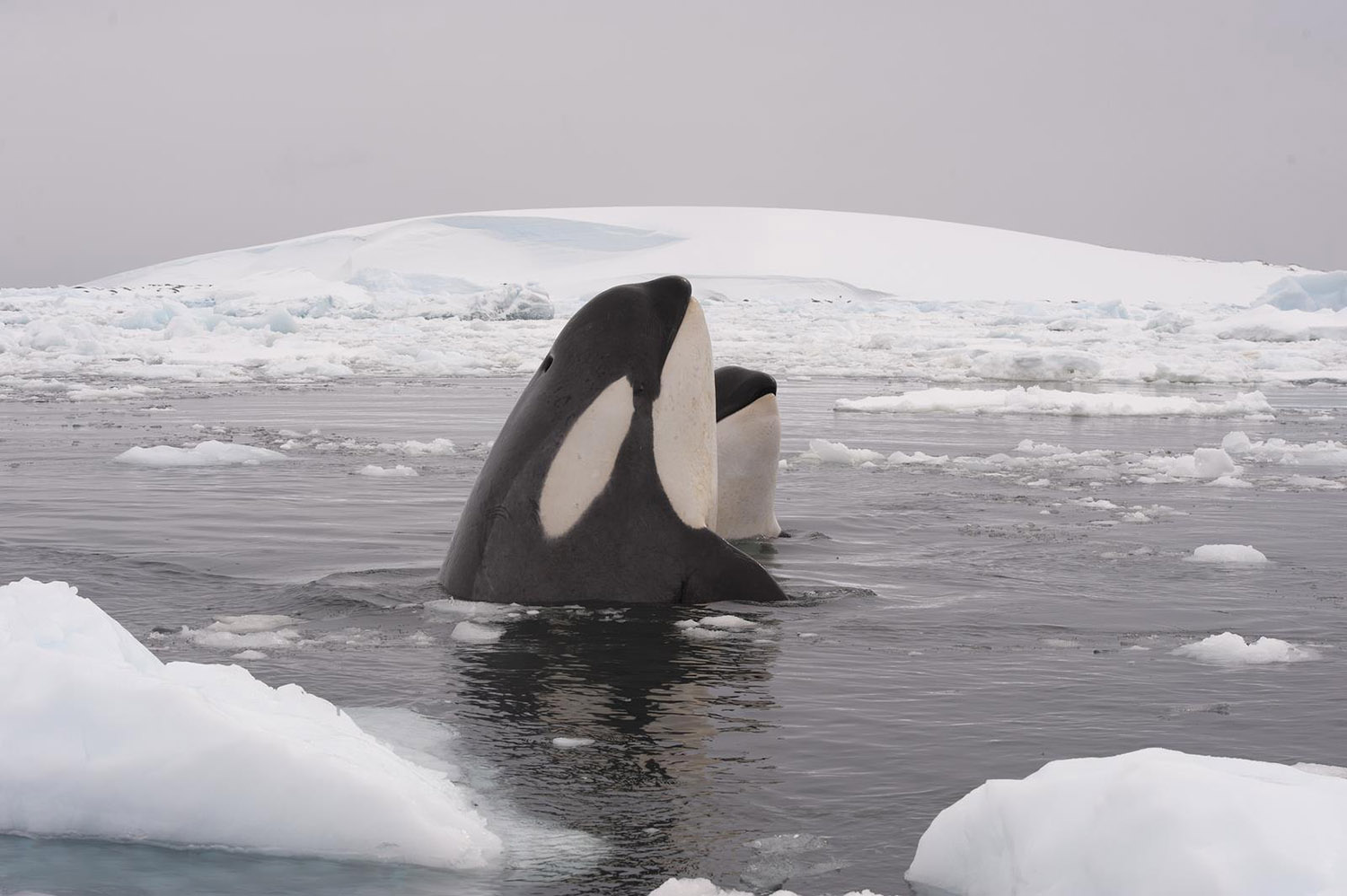
- Orcas — the ocean’s iconic apex predators — roam Antarctic waters in pods, often hunting seals, whales, and fish with incredible teamwork and intelligence.
- Their striking black-and-white pattern is a hallmark against the blue-grey ocean — and a visual cue that something dramatic might be unfolding beneath.
- For many travellers, an orca sighting is among the most thrilling wildlife moments imaginable: a chance to glimpse raw power, grace, and complex social life in one glimpse.
1. Emperor Penguin
The ultimate Antarctic icon. Emperor penguins are the tallest and heaviest penguins alive — and the toughest. They breed in the dead of winter, trekking inland across the ice and huddling by the thousands to survive temperatures that would freeze your eyelashes solid. Seeing emperors in the wild is like witnessing royalty: dignified, stoic, and surprisingly adorable when they shuffle.

- The crowning jewel of Antarctic wildlife — emperors are the largest penguins in the world, standing around 1.15 m tall and weighing up to 30–40 kg (66–88 lbs).
- They’re born to brave extremes: during the brutal Antarctic winter, they march inland, incubate eggs, and huddle together for warmth — a testament to endurance and cooperation.
- Seeing a group of emperor penguins braving wind, ice and snow — often with tiny chicks perched precariously on their feet — is like witnessing Arctic nobility: tough, dignified, and utterly captivating.
Why Antarctic Wildlife Is So Extraordinary
Antarctica isn’t just a frozen wilderness — it’s a thriving, interconnected ecosystem. Krill drive the food chain, penguins chase the krill, seals chase the penguins (or fish), and whales roam the vast Southern Ocean in tune with the seasons and the ice.
Every species here has evolved remarkable adaptations: extreme insulation, social behaviours, deep-diving abilities, and in many cases, a strong sense of comedic timing.
Planning Your Antarctic Wildlife Adventure?
No matter where you travel in Antarctica — the Peninsula, the Ross Sea, the Weddell Sea or Polar Circle, or the sub-Antarctic islands — every day offers unforgettable wildlife encounters. From penguins waddling straight past you to whales surfacing beside your zodiac, Antarctic wildlife viewing isn’t just sightseeing — it’s witnessing nature at its raw, majestic and slightly mischievous best.
Following are some expedition trips where you can see some of these top Antarctica animals:
Expeditions Online Newsletter
Sign up to be an Expeditions Online insider and receive info on exclusive deals, discounts and more!