Scotland to Spitsbergen - Puffins, Sea Ice and Wildlife: Ultramarine
North Atlantic
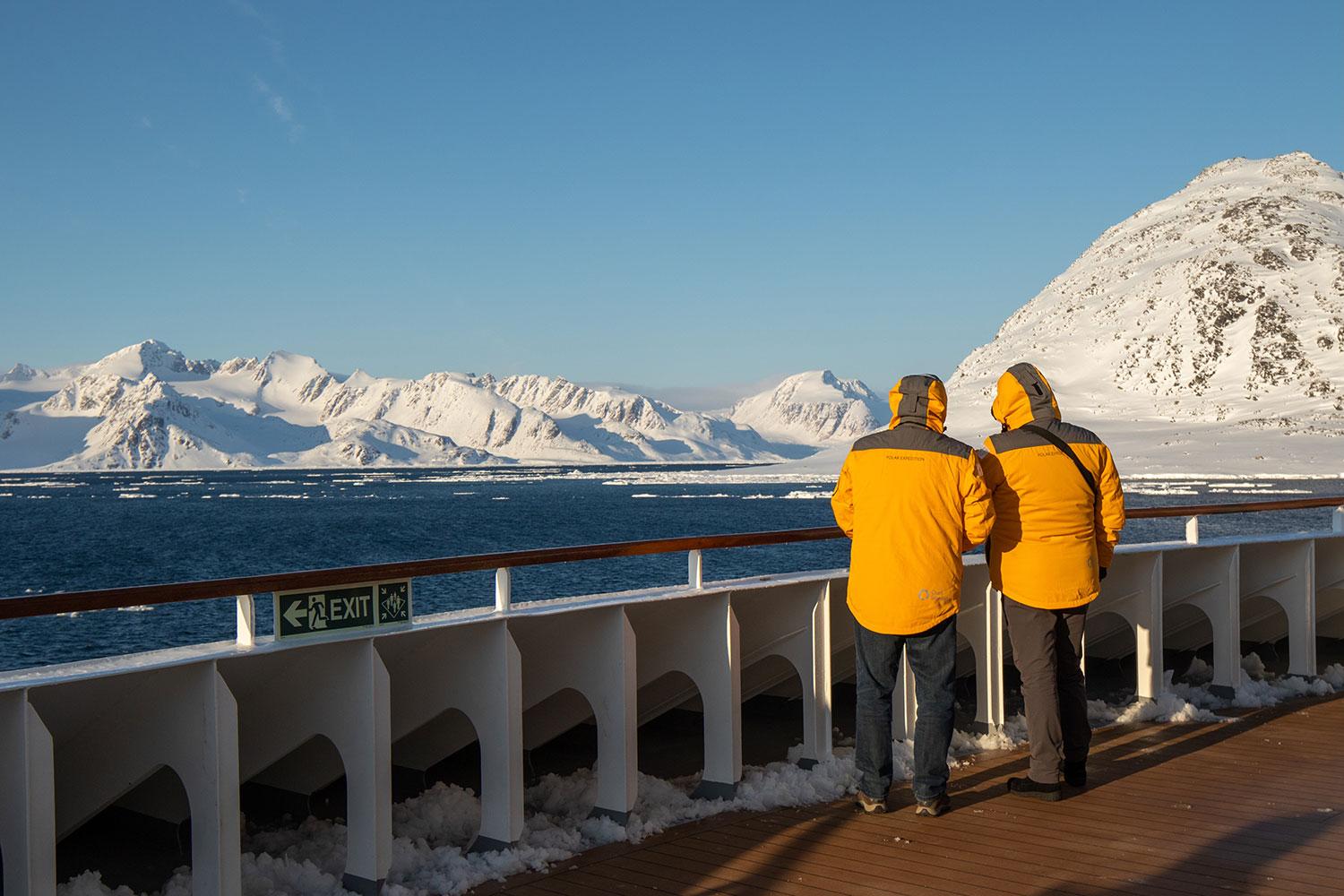
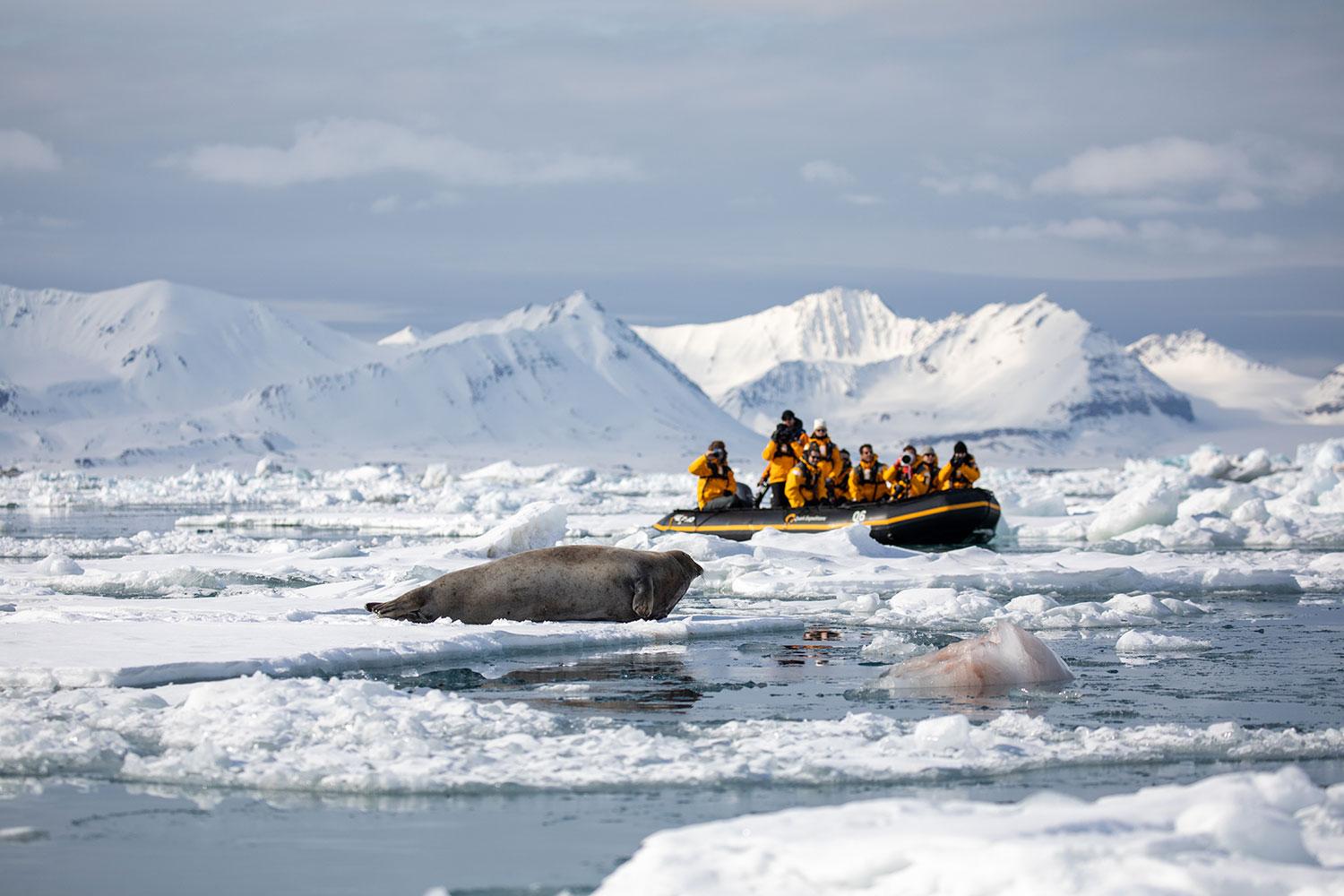
Few itineraries feature such contrasting destinations in a single trip—but this voyage does just that. Start in Scotland, exploring the Shetland and Orkney Islands—visiting impressive bird colonies and Neolithic historical sites—then cross the Norwegian Sea to the seldom-visited Bear Island and on to Svalbard. You’ll encounter plenty of ice in the many fjords we’ll visit, which increase chances of seeing walruses, polar bears, seals and other wildlife. The seasoned Expedition Team includes a special guest ornithologist and historian
Highlights
- Explore two Scottish archipelagos: Shetland and Orkney
- Learn from experts in Scottish Neolithic and Norwegian history, ornithology and glaciology
- Rare visit to Bear Island
- Photograph massive bird colonies in Scotland and Svalbard
- Visit Scottish Neolithic sites and Norse ruins
- Encounter sea ice, the foundation of polar life
- View Iconic wildlife of the Arctic and North Atlantic
Science and Discovery
A new initiative designed to foster community, curiosity and education. On select Ultramarine itineraries, Quark is collaborating with leading scientists and researchers to enrich guest learning on- and off-ship. Guest Engagement: Through researcher-led sessions, and interactive learning and field experiences with our expedition team, guests will gain a better understanding and appreciation of the polar wilderness. This Science & Discovery program will enable you to:
- Interact and connect with scientists and researchers who are actively collecting data during expeditions.
- Participate in citizen science programming to broaden their understanding and knowledge of the b polar ecosystem.
- Work with the expedition team to help collect and record data, ranging from experiences such as conducting seabird surveys on deck to documenting whale sightings on Zodiac excursions or joining interactive sampling activities to measure water conditions.
SCIENCE IN THE FIELD
Supported academic research through partnerships with institutions such as Seabird Watch to deepen understanding through access to projects that are contributing to published research and projects of high importance. In collaboration with the Polar Citizen Science Collective and Fjord Phyto, guests can engage in meaningful scientific data collection that supports targeted field research for projects like Happywhale.
On Sale
Discounted sale prices as shown. Additional 5% discount available if paid in full at time of booking. Contact us for details!
Stewart's Take
From Scotland to Svalbard - head out into the wild on this ultimate Arctic adventure in luxury!
Overview
Few itineraries feature such contrasting destinations in a single trip—but this voyage does just that. Start in Scotland, exploring the Shetland and Orkney Islands—visiting impressive bird colonies and Neolithic historical sites—then cross the Norwegian Sea to the seldom-visited Bear Island and on to Svalbard. You’ll encounter plenty of ice in the many fjords we’ll visit, which increase chances of seeing walruses, polar bears, seals and other wildlife. The seasoned Expedition Team includes a special guest ornithologist and historian


Itinerary
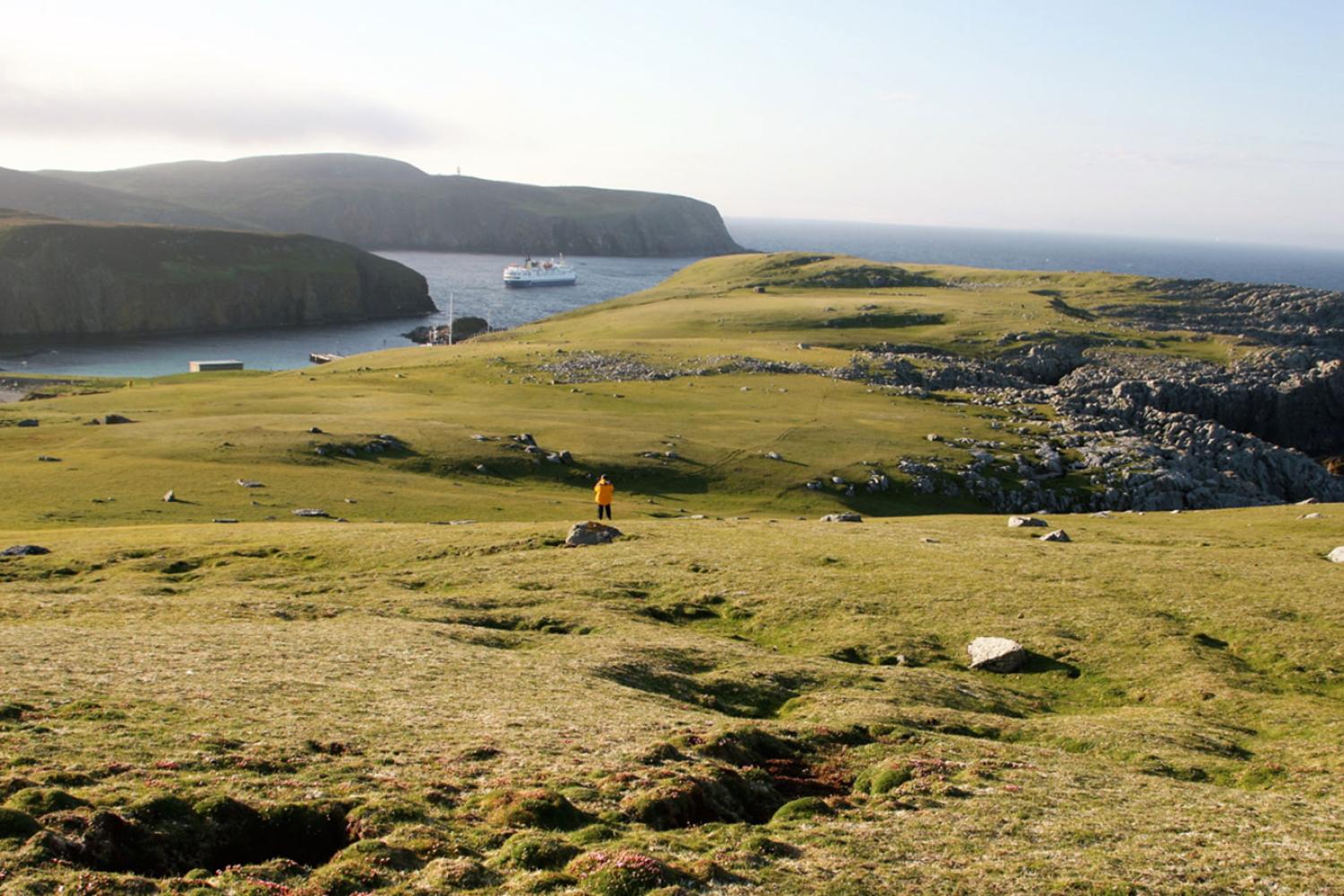
DAY 1 - Arrive in Aberdeen, Scotland Arrive any time on Day 1 and make your way to the group hotel, which is included in your Charter Flight & Hotel Package. The Scottish city of Aberdeen, your gateway for this adventure, is known as the Granite City, as it was once the granite capital of the world. You’ll understand as soon as you see the grey Victorian buildings—that sparkle in the sunlight. A bustling cultural hub, Aberdeen also offers a range of museums, galleries, theaters, shops, cafés and restaurants to explore. DAY 2 - Embark on Ultramarine Today you will have free time before being transferred to the port to board your ship. Upon boarding the ship, you will be welcomed by the expedition team and crew who will provide ship orientation and an introductory briefing of the voyage to come. DAY 3 - Orkney: Neolithic sites, birds, and close-knit communities Situated just north of mainland Scotland, Orkney is an archipelago of islands steeped in history. Some of Europe’s most intact Neolithic ruins are found here, dating back 5,000 to 8,000 years. Chief among them is Skara Brae, a small community of ten stone homes, situated within earthen dams, that dates to 3180 BCE. Skara Brae is part of the Heart of Neolithic Orkney World Heritage Site, and is considered one of the most important Neolithic sites in all of Europe. Walking among these ancient homes and looking out toward the sea in the Bay of Skaill provides a sense of connection to humans who lived before the Egyptian pyramids were constructed. Papa Westray, a more remote island just north of Skara Brae—and more difficult to access—is also home to an ancient farmstead dating back to 3700 BCE. The surrounding farmlands are peaceful and quiet. The sounds of summer and migratory birds, combined with waves from the North Atlantic Ocean crashing against the shoreline below, seem to transcend time—offering a fleeting glimpse into what life may have looked and sounded like thousands of years ago. Home to more than 70 islands, 20 of Situated just north of mainland Scotland, Orkney is an archipelago of islands steeped in history. Some of Europe’s most intact Neolithic ruins are found which are inhabited, Orkney is a unique region with strong connections to the polar regions. Dr. John Rae, the famous Arctic explorer who helped map the Northwest Passage in the 1830s and 1840s, was Orcadian, and a monument to his achievements stands in the village of Stromness. Several Orcadian place names can be found in the Antarctic, including the South Orkney Islands and the Stromness whaling station in South Georgia. The region is a network of pastoral green islands framed by rugged coastlines and occasional white sandy beaches. These islands—with cliffs ideal for nesting seabirds—are perfectly situated for both seasonal bird colonies and migratory species en route to the Arctic. Birders will find Orkney an excellent place to spot species like Atlantic puffins, northern gannets, razorbills, kittiwakes, Arctic terns, Arctic skuas, and many others. Guests can explore off-ship—as conditions allow—by joining Zodiac, kayak, and paddling excursions, as well as guided and self-guided walks. DAY 4 Shetland: Sheer cliffs, white sandy beaches, and 5000 year-old ruins Further north, Shetland is another archipelago with a truly unique culture and feel. A fusion of Norse and Scottish history and culture—and a visceral connection to the wind, weather, and sea—Shetland feels like no other place in the UK. Here, we intend to explore the bird colonies of Sumburgh Head, 100-meter (328 feet) cliffs that descend into the rich marine environment below, framed by jagged rocky outcroppings that pierce through the sea. Common species spotted here include Atlantic puffins, guillemots, razorbills, and kittiwakes. Additional marine wildlife in the vicinity includes white-beaked dolphins, minke whales, and occasionally orca and humpback whales. The cliffs themselves are impressive in their rugged beauty, marked by a picturesque lighthouse that serves as an important beacon for mariners transiting the area. Not far from Sumburgh Head, and deeper into the West Voe of Sumburgh, is the world-famous Jarlshof—an archaeological site considered to be among Europe’s most important. Situated among soft green pastoral farmland, and just above a beautiful sandy Scottish beach, the area showcases thousands of years of human history, with Neolithic, Bronze Age, Iron Age, and Viking sites all immediately visible and within close proximity to one another. Roundhouses from the Iron Age, circa 400–800 BCE, are well-excavated, as are longhouses and stone walls from the Viking Age. Additionally, the Old House of Sumburgh—dating to the 15th century, when Shetland passed from Norse to Scottish control—stands among ruins that are thousands of years older. Jarlshof is a true tapestry of history, with many layers and eras woven together. There are plenty of opportunities to be active on this journey. We’ll take to the Zodiacs to explore the coastal shorelines for cruising as well as shore landings. If weather permits, we’ll deploy our sea kayak and paddle programs. And whenever you’re back on the ship, head to the outer decks—especially as we approach our excursion sites—for birds and marine mammals. DAY 5 TO 7 - At Sea: Sailing toward the Norwegian High Arctic While at sea, be sure to spend time on the outer decks to watch for resident seabirds and migrating birds, or enjoy the views through the floor-to-ceiling windows. We will ride the relatively warm current north—the same current that helps keep the Norwegian coast and west coast of Svalbard relatively temperate. While onboard, your Expedition Team will share their knowledge and expertise through scheduled presentations on ornithology, biology, history, and geology, as well as through informal interactions throughout the voyage. Your at-sea days provide ample opportunity to enjoy the amenities onboard Ultramarine: the Tundra Spa & Sauna, the fitness centre, the library, or one of several lounges where you can enjoy a drink with fellow travellers. DAY 8 - Bear Island: Spectacular Seabird habitat Situated more than 400 kilometers north of mainland Norway, where the Greenland, Norwegian, and Barents sea converge, Bear Island is the gateway to Svalbard—and home to prolific bird populations. Visiting is a special privilege, as the island is rarely accessed due to its isolation. But it’s well worth the effort. More than 1.5 million birds flock to Bear Island each year. Hundreds of thousands nest on its near-vertical cliffs, where they can forage in the rich marine environment. If wind and waves allow, it’s possible we’ll offer a Zodiac cruise here along cliffs teeming with birds, with a constant procession coming and going from their nest sites. Little auks, Brünnich’s guillemots, common guillemots, kittiwakes, and northern fulmars are found in prolific numbers, alongside smaller colonies of Atlantic puffins. Many more migratory birds use the island as a critical stopover on their annual journey to the Arctic. On a map, Bear Island appears small. But by Zodiac, its cliff walls—some rising more than 400 meters (1,310 feet) from the sea—feel colossal. Shorelines are fully exposed to the open ocean, with waves crashing in an astounding display of nature’s power. A few sheltered coves— used by whalers, sealers, explorers, and researchers from the 16th to 21st centuries—may offer us a chance to explore this wild outpost at the gates of Svalbard. In early May, we may see hints of green emerging from an otherwise snowy landscape. Arctic foxes may be spotted on shore, eagerly awaiting the return of birds and their eggs. If conditions allow, we’ll make landfall, walking where few humans ever do. Remnants of whaling history from the early 17th century, along with more recent traces of meteorological and military activity, can be found here. Still, despite any human presence, the island retains a powerful sense of wilderness. DAY 9 & 10 - Storfjorden: Into the realm of Ice Our introduction to Svalbard begins in Storfjorden, a wide fjord in southern Svalbard that is often dense with sea ice in May. How far we travel will depend on current ice conditions. Sea ice is dynamic, capable of shifting dozens of kilometers in a day, and we’ll adapt accordingly to f ind the best opportunities to explore this keystone feature of the Arctic. We may spend considerable time here, navigating by ship and Zodiac along the ice edge in search of iconic wildlife such as polar bears and walrus, both drawn to the life-giving sea ice. Wildlife movements are unpredictable, so keep your binoculars close—you never know when something may appear. Your Expedition Team will share insights into the region’s features and history as we explore. If conditions allow, we may even step onto the sea ice itself. DAY 11 Hornsund: Mountains, glaciers, and icebergs After excitedly exploring the open sea ice, we’ll continue toward Svalbard’s west coast for a closer, more intimate encounter with the wilderness of the archipelago. Our first day will be spent in and around Hornsund, a region of striking landscapes, mountains, glaciers and icebergs. Sea ice may still be present, and if so, we’ll watch for wildlife whose lives depend on it for food and survival. Our aim is to explore the fjord by Zodiac and on foot, though you should expect plenty of snow underfoot. Hornsund is home to several tidewater glaciers, which we hope to approach by Zodiac. Icebergs mix with brash and sea ice, creating a unique crackling soundscape that echoes the rhythm of the Arctic. Surrounding us, 800 to 1,400-meter (2,625 to 4,593 feet) peaks rise beneath Midnight Sun skies, the kind of scene many envision when dreaming of the High Arctic. Watch for Arctic fox, often seen in the area. Seabird colonies thrive here too, a reminder of the epic migrations these species undertake each spring to reach Svalbard—and again each fall as they return south. DAY 12 - Bellsund: Fjords, glaciers, birds and snow-capped mountains Moving north up the coast, we enter another large fjord with many smaller branches, each worth exploring. Bellsund, much like Hornsund, features several tidewater glaciers, which we aim to visit as conditions allow. It’s also home to a remarkable little auk colony, which we’ll approach by Zodiac to observe the early summer activity. Birder or not, it’s hard not to admire these small, resilient birds, perfectly adapted to this seemingly harsh environment. By late spring, skies over the colony are thick with birds, and we hope to witness the start of this seasonal spectacle. Reindeer are often spotted here too, and we’ll be watching for them. The landscape is iconic—snowcapped peaks layered in all directions, jagged rocky outcrops, and soft, snow-covered plains. If conditions allow, we’ll go ashore, though even in May, snow is likely. DAY 13 - Krossfjorden: Dramatic tidewater glaciers Overnight, we’ll push far up the coast to Krossfjorden, just 660 nautical miles from the North Pole. We aim to explore as much of the west coast as possible, as this dramatic fjord lies along a stretch of coastline shaped by a relatively warm current flowing from south to north—creating a surprisingly temperate environment compared to the harsher conditions farther north and east. Depending on ice and weather conditions, we hope to venture deep into the fjord to iconic sites such as Lilliehookbreen—a stunning tidewater glacier where seals often haul out on floating ice. The landscapes here blend the gentle and the dramatic—a picture-perfect scene of northern wilderness. To add variety to your photographs, consider experimenting with black and white photography, as the textures of mountains, valleys, snow, ice, and clouds can create striking images. You may also spot Arctic foxes, whether out on the ice or along the hillsides above, and seabird colonies occupy several of the cliffs deeper in the fjord. Avid birders should keep an eye out for king eiders. While Longyearbyen holds the title of northernmost city in the world, the northernmost settlement—Ny-Ålesund— lies in Kongsfjorden, a southern offshoot of Krossfjorden. Originally a coal mining outpost over a century ago, it now serves as an important year-round research station. Take a moment to soak in the surroundings and imagine what life must be like when the sun doesn’t set for months. Conversely, consider the challenges of staffing a research station through the long polar night, when the sun doesn’t rise for months. DAY 14 - Smeerenburgfjorden: Sea ice, walruses, and ghosts of a whaling past Today marks the northernmost point of our journey—just over 1300 kilometers (800 miles) from the North Pole. That’s comparable to a day-long road trip from St. Louis, Missouri, to Washington, (or Berlin to Milan or Brisbane to Canberra, Australia) yet here, it leads straight into the heart of the Arctic. As we look north from Smeerenburgfjorden, a striking fjord in northwest Svalbard, we can envision a wilderness covered in sea ice, stretching across the cap of the northern hemisphere all the way to Alaska. It’s theoretically possible to travel in a straight line to Greenland, Canada, Siberia or Alaska without encountering any land in between. Sea ice may lie just north of the coastline—or dozens of nautical miles offshore—depending on the currents and how the ice is moving at the time. Deeper into the fjord, we hope to land at a known walrus haulout: a sandy beach often covered in snow but used by walruses throughout the year. Arctic terns, among the world’s most impressive migratory species, nest in the fjord, and we may see them flying overhead as we travel by foot or Zodiac. From the walrus haulout, mountain ranges stretch across the f jord, evoking a sense of standing at—or beyond—the frontier. Evidence of human activity remains: relics of whaling and sealing industries dating back to the 1600s are still visible onshore. Not full-scale factories, but trypots—used to render whale blubber into oil—remain scattered about the area. DAY 15 - Isfjorden: Mountains, bird cliffs, and wildlife Our final expedition day will likely be spent in or around Isfjorden, the fjord system where Longyearbyen is located. The mountainous, glaciated scenery continues here, and we’ll spend much of the day exploring the coastlines—likely among seabirds. Isfjorden can also be an excellent place to spot whales, some of which may have arrived at their summer feeding grounds by now. Spend time on the outer decks taking in the scenery— you may spot various species of marine life. Our main goal today is to visit Alkhornet, the iconic seabird colony and also a good place to look for reindeer and Arctic fox. If conditions allow, we’ll make landfall, giving ourselves one last chance to set foot in this far northern wilderness. As we prepare to leave, we can appreciate the little auks, perfectly at home beneath the horn-shaped mountain overlooking the fjord, and the reindeer patiently awaiting summer’s abundant vegetation. They’ll remain here for a while, going about their daily lives in a vast wilderness that stretches in all directions for hundreds—if not thousands—of nautical miles. DAY 16 - Disembark in Longyearbyen The moment has come to say farewell. Time permitting, you may be able to explore the frontier-style settlement of Longyearbyen before the group transfer to the airport for the charter flight to Helsinki. Upon arrival in Helsinki, you’ll be transferred to your hotel for the night. Both are included in the Charter Flight & Hotel Package. DAY 17 - Depart Helsinki After breakfast, make your way independently to the airport for your onward flight home, or stay to explore Finland’s culturally-rich capital on your ownSea Kayaking

Selected departures may include an option for Sea Kayaking – contact us for availability! Sea kayaking on a polar expedition brings you face-to-face with the polar wilderness from a unique, water-level vantage. Glide silently among icebergs and beside glaciers, drift past curious birds or seals, and explore remote fjords and coastline not accessible by ships. Kayaking becomes a deeply immersive, sensory experience—crisp air, icy water, wildlife calls and the hush of untouched nature. Guided by expert polar staff, you paddle safely in small groups, often with Zodiac support close by. Whether you choose a single paddle outing or a full kayak program, this adventure gives you an intimate connection with polar landscapes few ever experience. >>Read More Details on this information page!
Vessel
Luxury Expedition Vessel: Ultramarine
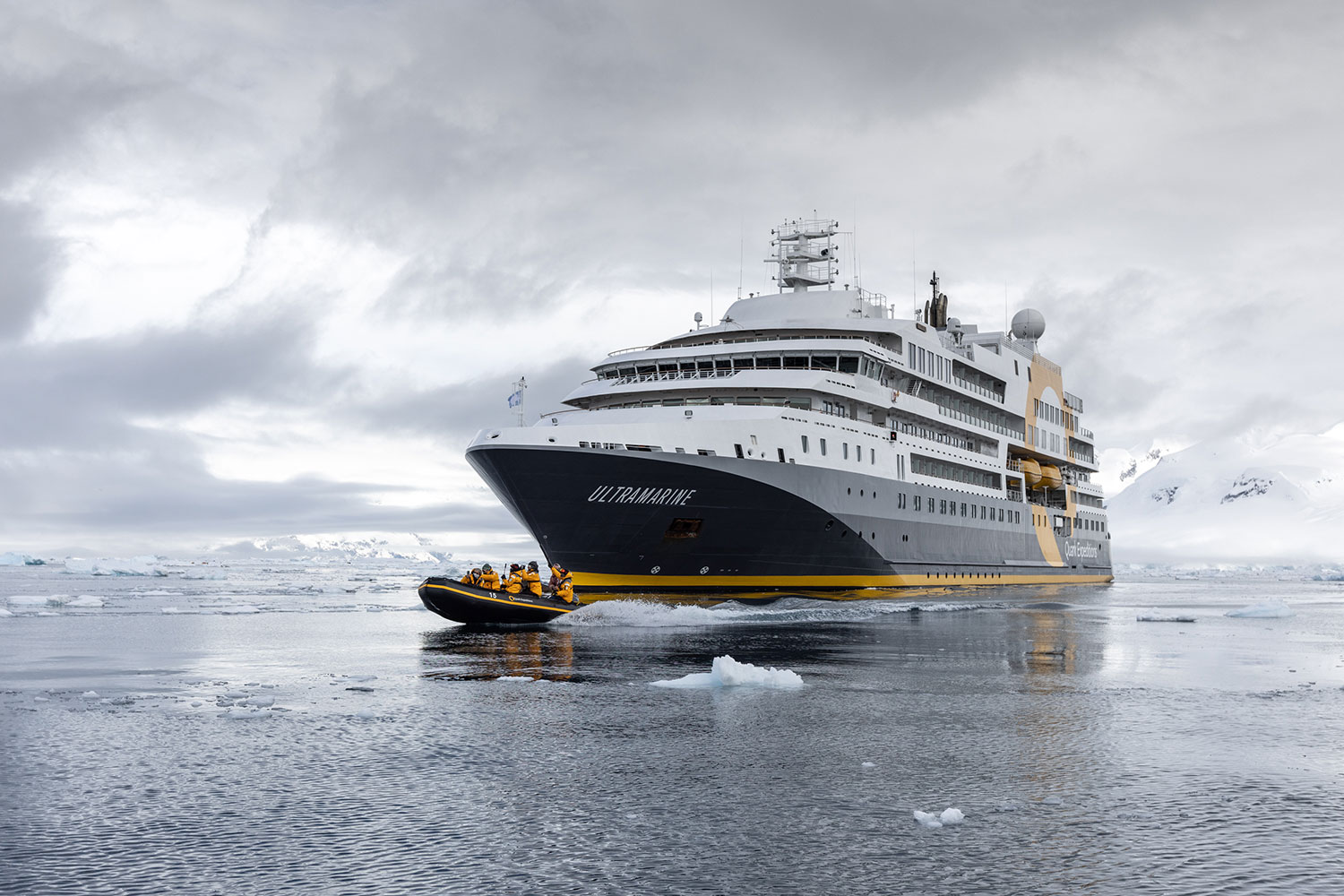
The newest ship in Quark's fleet, Ultramarine, is designed to go beyond the familiar in polar exploration, to discover new places, and to immerse you in the best the region has to offer. Equipped with two twin-engine helicopters for extraordinary sightseeing, this outstanding vessel offers the widest range of adventure activities in the industry, the most spacious suites in its category, breathtaking public spaces, and more outdoor wildlife viewing spaces than other expedition ships its size. It also features an innovative mix of sustainability features that exceed all industry standards. With all this and more, Ultramarine is set to give you the ultimate polar expedition experience!
Booking Information
Essential Information
Rates and Share Bookings
Prices shown are per person on a shared basis. If you are travelling alone and wish to share, you will be matched with someone of the same gender at share rate. If desired, Single occupancy may be available in dedicated solo category cabins, or at 1.7 times the twin share rate for standard twin cabins (or twice the share rate for premium cabins or suites).
Deposit
Reservations require a deposit of 25% at the time you receive a booking confirmation from Expeditions Online. A payment link will be sent to you and this may be paid by major credit card. Bookings made within 90 days of departure require 100% payment.
Final Payment
Balances are due 90 days prior to departure and may be paid by bank transfer.
Cancellation
There is free cancellation if you change your mind within 15 days of booking. Should you need to cancel after this, the following cancellation fees apply - however these are eligible to be applied to a future voyage booked within 1 year of cancellation date. All requests for cancellation must be received in writing to Expeditions Online. Within (and including) 15 days after the date the Booking Confirmation is issued (where the booking is confirmed more than 180 days prior to Day 1 of the Expedition): Free cancellation save for any non-refundable items identified to you or set out in the Booking Confirmation
From (and including) 16 days after the date the Booking Confirmation is issued up to (and including) 90 days prior to Day 1 of the Expedition: 25% of the total booking amount as specified in the Booking Confirmation or (as applicable) the New Booking Confirmation.89 or less prior to Day 1 of the Expedition (including any cancellation after the Expedition has started): 100% of the total booking amount as specified in the Booking Confirmation or (as applicable) the New Booking Confirmation.If full payment has not yet been received, the full penalty will still apply, and any unpaid balance is due immediately. To protect your investment, we highly recommend that you obtain adequate trip cancellation insurance!Refund Guarantee.
We will of course refund all monies paid should the voyage itself be cancelled for any reason. All client monies paid to Expeditions Online are protected under consumer laws by a Travel Guarantee bond placed with the Swedish Legal, Financial and Administrative Services Agency (Kammarkollegiet).
No surcharges - ever.
For peace of mind, the shipping company will not apply fuel or any other surcharges—for any reason—to a booking once it’s confirmed. The price you book, is the price you pay.
Booking Terms
Please read carefully the Terms and Conditions for Expeditions Online (link at the bottom of this page). This voyage is operated by Quark Expeditions and you additionally travel under their terms and conditions as the operator as well as of the Shipping Company/transport carrier. Details will be forwarded to you at the time of booking
Included
- An expedition parka to keep
- A pair of waterproof expedition boots on loan for landings and Zodiac cruising excursions
- Leadership throughout your voyage by experienced Expedition Leaders, including shore landings and other activities
- All Zodiac transfers and cruising as per the daily program
- All shore landings as per the daily program
- Shipboard accommodation with daily housekeeping
- All meals, snacks, soft drinks and juices on board throughout your voyage
- Complimentary select beer, wines and cocktails during bar service hours and dinner
- Coffee, tea and cocoa available around the clock
- Formal and informal presentations by our Expedition Team and guest speakers as scheduled
- A photographic journal documenting the expedition
- Hair dryer and bathrobes in every cabin
- Complimentary Wi-Fi service on one device permitting basic Internet browsing, email, posting on social media and voice applications. (Premium packages are available for more data-intensive applications.) Note: Internet access in the polar regions is subject to geography, climate, and other factors beyond control.
- All miscellaneous service taxes and port charges throughout the program
- All luggage handling aboard the ship
Excluded
- Charter Flight & Hotel Package*
- International airfare
- Arrival and departure transfers, except where listed in the Charter Flight and Hotel Package
- Passport and applicable visa expenses
- Government arrival and departure taxes not mentioned
- Baggage, cancellation, interruption and medical travel insurance—strongly recommended
- Excess-baggage fees on international and domestic f lights
- Mandatory waterproof pants for Zodiac landing and cruising excursions, or any other gear not mentioned
- Laundry, bar, spa and other personal charges, unless specified
- Phone charges may vary by location
- Voluntary gratuity at the end of the voyage for expedition staff and shipboard crew
- Additional overnight accommodation
- One pre-expedition hotel night in Aberdeen, and one post-expedition hotel night in Helsinki (breakfast included)
- Group transfer from Aberdeen hotel to ship on embarkation day
- Departure transfer in Longyearbyen on disembarkation day
- Charter flight from Longyearbyen to Helsinki on disembarkation day

Tour Dossier
Scotland to Spitsbergen - Puffins, Sea Ice and Wildlife: Ultramarine
This 17 day expedition aboard the luxurious Ultramarine visits remote North Atlantic islands up to the Arctic wilderness of Svalbard
File Creation date: 2026-10-24 - for updated information and dates and prices see the following page:
http://expeditionsonline.com/tour/scotland-to-spitsbergen-puffins-sea-ice-widllife-ultramarine_427
Scotland to Spitsbergen - Puffins, Sea Ice and Wildlife: Ultramarine
Duration: 17 days
Location: North Atlantic
Available: May
Start: Aberdeen, Scotland
Finish: Longyearbyen, Norway (with flight to Helsinki)
Highlights
- Explore two Scottish archipelagos: Shetland and Orkney
- Learn from experts in Scottish Neolithic and Norwegian history, ornithology and glaciology
- Rare visit to Bear Island
- Photograph massive bird colonies in Scotland and Svalbard
- Visit Scottish Neolithic sites and Norse ruins
- Encounter sea ice, the foundation of polar life
- View Iconic wildlife of the Arctic and North Atlantic
Itinerary
Few itineraries feature such contrasting destinations in a single trip—but this voyage does just that. Start in Scotland, exploring the Shetland and Orkney Islands—visiting impressive bird colonies and Neolithic historical sites—then cross the Norwegian Sea to the seldom-visited Bear Island and on to Svalbard. You’ll encounter plenty of ice in the many fjords we’ll visit, which increase chances of seeing walruses, polar bears, seals and other wildlife. The seasoned Expedition Team includes a special guest ornithologist and historian
Ship Information
Luxury Expedition Vessel: Ultramarine
The newest ship in Quark's fleet, Ultramarine, is designed to go beyond the familiar in polar exploration, to discover new places, and to immerse you in the best the region has to offer. Equipped with two twin-engine helicopters for extraordinary sightseeing, this outstanding vessel offers the widest range of adventure activities in the industry, the most spacious suites in its category, breathtaking public spaces, and more outdoor wildlife viewing spaces than other expedition ships its size. It also features an innovative mix of sustainability features that exceed all industry standards. With all this and more, Ultramarine is set to give you the ultimate polar expedition experience!
Scotland to Spitsbergen - Puffins, Sea Ice and Wildlife: Ultramarine
For the latest, up-to-date departure dates and prices please refer to the tour page:
http://expeditionsonline.com/tour/scotland-to-spitsbergen-puffins-sea-ice-widllife-ultramarine_427
- Within (and including) 15 days after the date the Booking Confirmation is issued (where the booking is confirmed more than 180 days prior to Day 1 of the Expedition): Free cancellation save for any non-refundable items identified to you or set out in the Booking Confirmation
- From (and including) 16 days after the date the Booking Confirmation is issued up to (and including) 90 days prior to Day 1 of the Expedition: 25% of the total booking amount as specified in the Booking Confirmation or (as applicable) the New Booking Confirmation.
- 89 or less prior to Day 1 of the Expedition (including any cancellation after the Expedition has started): 100% of the total booking amount as specified in the Booking Confirmation or (as applicable) the New Booking Confirmation.
Included
- An expedition parka to keep
- A pair of waterproof expedition boots on loan for landings and Zodiac cruising excursions
- Leadership throughout your voyage by experienced Expedition Leaders, including shore landings and other activities
- All Zodiac transfers and cruising as per the daily program
- All shore landings as per the daily program
- Shipboard accommodation with daily housekeeping
- All meals, snacks, soft drinks and juices on board throughout your voyage
- Complimentary select beer, wines and cocktails during bar service hours and dinner
- Coffee, tea and cocoa available around the clock
- Formal and informal presentations by our Expedition Team and guest speakers as scheduled
- A photographic journal documenting the expedition
- Hair dryer and bathrobes in every cabin
- Complimentary Wi-Fi service on one device permitting basic Internet browsing, email, posting on social media and voice applications. (Premium packages are available for more data-intensive applications.) Note: Internet access in the polar regions is subject to geography, climate, and other factors beyond control.
- All miscellaneous service taxes and port charges throughout the program
- All luggage handling aboard the ship
Excluded
- Charter Flight & Hotel Package*
- International airfare
- Arrival and departure transfers, except where listed in the Charter Flight and Hotel Package
- Passport and applicable visa expenses
- Government arrival and departure taxes not mentioned
- Baggage, cancellation, interruption and medical travel insurance—strongly recommended
- Excess-baggage fees on international and domestic f lights
- Mandatory waterproof pants for Zodiac landing and cruising excursions, or any other gear not mentioned
- Laundry, bar, spa and other personal charges, unless specified
- Phone charges may vary by location
- Voluntary gratuity at the end of the voyage for expedition staff and shipboard crew
- Additional overnight accommodation
- One pre-expedition hotel night in Aberdeen, and one post-expedition hotel night in Helsinki (breakfast included)
- Group transfer from Aberdeen hotel to ship on embarkation day
- Departure transfer in Longyearbyen on disembarkation day
- Charter flight from Longyearbyen to Helsinki on disembarkation day
General Terms and Conditions
BOOKING ENQUIRIES:
Expeditions Online Newsletter
Sign up to be an Expeditions Online insider and receive info on exclusive deals, discounts and more!