Ross Sea Odyssey: Greg Mortimer
Antarctic Peninsula
Experience one of the most remote, historic sectors of the deep South in comfort on this exploratory expedition aboard the luxurious Greg Mortimer. Your journey begins in the subantarctic, where yellow-eyed penguins waddle through wizened rātā forests and royal albatross nest amid megaherb moors. Cross the Antarctic Circle and cruise the pack, keeping watch for emperor and Adélie penguins porpoising along the ice edge, orcas patrolling for prey, and snow petrels soaring against a backdrop of the vast Antarctic Ice Sheet
Highlights
- Skirt rowdy beaches crowded with harems of New Zealand sea lions to reach rata forests where rare yellow-eyed penguins can be found.
- Revel in the richness of the unique Ross Sea ecosystem
- Navigate through gleaming pack ice alive with Weddell and leopard seals, Adélie and emperor penguins and whales feeding in fathomless leads.
- Reflect on the remarkable achievements of the heroic age explorers as we attempt to visit some of their beautifully preserved historic huts (conditions permitting).
Stewart's Take
Remotest Antarctica with a state-of-the-art expedition ship
Overview
Experience one of the most remote, historic sectors of the deep South in comfort on this exploratory expedition aboard the luxurious Greg Mortimer. Your journey begins in the subantarctic, where yellow-eyed penguins waddle through wizened rātā forests and royal albatross nest amid megaherb moors. Cross the Antarctic Circle and cruise the pack, keeping watch for emperor and Adélie penguins porpoising along the ice edge, orcas patrolling for prey, and snow petrels soaring against a backdrop of the vast Antarctic Ice Sheet



Itinerary
Day 1 Arrive Hobart Arrive in Hobart, where you will be met and transferred with your fellow expeditioners to your assigned pre-voyage hotel. If you are already in Hobart, we ask you to make your way to your hotel. This afternoon, visit the hospitality desk in the lobby to collect your luggage tags. Please clearly label the tags with your name and ship cabin number. Our team will confirm details regarding your embarkation day, answer any questions and provide you with information on where to dine or purchase last minute items. Enjoy your evening in Australia’s southernmost capital city. You may like to indulge in a sumptuous meal at one of Hobart’s celebrated restaurants, or perhaps enjoy a leisurely stroll along the historic waterfront. Day 2 Embarkation This morning, enjoy breakfast and check-out. Please ensure your cabin luggage is fitted with cabin tags clearly labelled with your name and cabin number. By 11.00 am, take your cabin luggage to hotel reception, prior to, or at check-out. Your luggage will be stored and transferred directly to the port for clearance, to be placed in your cabin ahead of your arrival on board. Please keep any valuables or personal items with you throughout the day. Your morning is at leisure to explore Hobart. This afternoon, settle into your beautifully appointed cabin and discover the many public spaces designed with your comfort in mind. This luxurious vessel is yours to explore! As we throw the lines and set sail down the Derwent River, join your expedition team on deck to enjoy panoramic views of the Hobart foreshore, and the dramatic fluted columns of the Tasman Peninsula. From Storm Bay we set a southerly course, following in the wake of the vessel Aurora, which carried Sir Douglas Mawson’s Australasian Antarctic Expedition (AAE) 100 years ago. Days 3-5 At Sea On an expedition such as this, the journey is as significant as the destination. Sea days are a wonderful opportunity to relax, meet your fellow travellers and learn about the history, environment and local wildlife in this fascinating corner of the globe. As you acclimatise to life on board, your expedition team is available to answer any questions you may have and offer pro-tips on photography and birdwatching. With decades of collective experience in the region, they love to share their expertise and enthusiasm with fellow travellers. Specialists across a range of fields will offer entertaining talks and presentations on the local wildlife and history, which you won’t want to miss! Once you’ve settled in, you may like to pamper yourself with a sauna, or work out at the onboard gym. For the bookworms, our well-equipped polar library is the perfect place to while away the hours at sea, and the bar is a vibrant social hub to get to know your fellow expeditioners. As you take in the vast expanse of the Southern Ocean, spare a thought for Mawson and his party, who made this transit aboard the Aurora, a wooden vessel no longer than an Olympic swimming pool! Mawson reported sightings of many whales and albatross in these waters, so spend some time out on deck with your binoculars - or grab a ‘cuppa’ and find a vantage point in one of our spacious observation lounges. Days 6-7 Macquarie Island “Penguins were in thousands on the uprising cliffs, and from rookeries near and far came an incessant din . . . seabirds of many varieties gave warning of our near approach to their nests” Douglas Mawson, 1911. As they sailed towards Antarctica, Mawson and his men encountered ‘an exquisite scene’. Macquarie Island (known affectionately as Macca) rises steeply from the Southern Ocean in a series of emerald summits: a beautifully fierce, elemental landscape teeming with life. Keep your binoculars handy because this subantarctic refuge is home to 3.5 million breeding seabirds, including no less than four species of penguin! Alongside boisterous colonies of tuxedoed kings, charming gentoos, robust rockhoppers and endemic royal penguins, you’ll find three types of fur seals and a large proportion of the world’s elephant seals. Layer up and head out on deck to experience the sound, sight (and smell!) as you approach one of the largest concentrations of life in the Southern Ocean. Remember to keep an eye out for Macca’s kelp forests—these remarkable underwater ecosystems are quite mesmerising as their fronds sway back and forth on the water’s surface. In addition to being a globally recognised and protected wildlife refuge, Macquarie Island played an important role in Antarctic history. It was here, in 1911, that five men disembarked Mawson’s Aurora and established a radio relay station which would transmit the first communication from Antarctica to the outside world. Days 8-10 At Sea As Macquarie Island slips over the horizon, keep watch for wandering, grey-headed, black-browed and light-mantled albatross, which may follow the ship to bid you farewell as you continue south. Close observers may notice a subtle change in the character of the sea as you cross the Antarctic Convergence. Beyond this zone where the waters of the north and south mix, the sea surface temperature drops by about 4°C (39°F), signalling your entry into the Antarctic. This transition zone is known for its nutrient waters, so keep watch for porpoising penguins, flocks of fluttering Antarctic petrels, or perhaps the more solitary snow petrel. You’re not far from the Antarctic Circle, so your first iceberg can’t be far away! Sea days are a great opportunity for some R & R as you digest your subantarctic experiences and prepare for the next phase of your voyage. Relax and unwind your way, perhaps meeting newfound friends at the bar, treating yourself to a sauna, or editing some images in the comfort of your cabin. And join your expedition team in the lecture room for presentations on the charismatic wildlife and extraordinary adventures that took place along the epic Antarctic coastline you are about to experience. Days 11-17 Victoria Land Coast and the Ross Sea It’s almost impossible to describe the feeling of arriving in this storied, ice-bound sector of Antarctica. Stepping outside and taking a deep breath of some of the most fresh, crisp air on earth is an experience to cherish forever. The Ross Sea region is a globally significant wildlife sanctuary. Its nutrient-rich waters support an astonishing array of uniquely adapted Antarctic species, including Ross Sea orcas, Antarctic petrels and South Pacific Weddell seals. It is also home to Antarctica’s largest Adélie penguin colony, and many of the largest emperor penguin colonies. The unique biodiversity of the Ross Sea has been protected within the world’s largest marine protected area since 2016. The human heritage of the Ross Sea coast is equally impressive. Since James Clark Ross discovered the region in 1841, countless expeditions have built base camps on scattered ice-free slivers of land, using them as staging posts for bold forays across the polar plateau. Many of them departed in a hurry, leaving artefacts, scientific equipment and sometimes entire huts behind. Today these sites are preserved as open-air museums and protected under the Antarctic Treaty System. Embrace the spirit of exploration as your expedition team designs your voyage from day to day, bringing decades of experience to selecting the ideal sites based on the prevailing weather, ice conditions and wildlife opportunities. Some places we may visit include: Ross Ice Shelf Find a spot on deck as we cruise perfectly cleaved ice cliffs towering some 30 metres above the crystalline waters of the Ross Sea. This is the floating edge of the largest ice shelf in Antarctica, which covers an area the size of France. Watch for elegant emperor penguins, sweet-faced Weddell seals hauled out on ice floes, and the unmistakable ‘pouf’ of an orca’s exhalation. Franklin Island This delightful ice-free outpost with a rookery of rambunctious Adélie penguins is well worth a visit. Stretch your legs as you stroll up a gentle incline past the colony to a high point, where panoramic views of the Ross archipelago and the ice shelf unfurl. McMurdo Sound Enter a realm of exquisite beauty, an otherworldly icescape set against a backdrop of gleaming glaciers, shimmering mountains, and the polar ice sheet itself. McMurdo Sound is the historic gateway to the South Pole and remains a busy working harbour today, serving as a logistics hub for the extensive scientific operations taking place at the McMurdo and Scott Research bases on Ross Island. It is here, in this achingly barren landscape, that early explorers established their base camps and struck out for the South Pole. If conditions allow, we aim to land at one (or more) of their beautifully preserved huts, many of which still stand, to dwell for a moment amongst the artefacts of a distant time, and reflect on the triumphs and tragedies of those who brought them here. Cape Washington, Terra Nova Bay Bounded by soaring peaks and fed by immense glaciers, Terra Nova Bay supports an abundance of polar wildlife, including the rarely sighted Arnoux's Beaked Whale. Fast ice anchored to the bay’s northern shore in the shelter of Cape Washington is home to one of the largest known emperor penguin colonies. Some 20,000 males huddle here each winter, incubating their eggs and awaiting the sun’s return. Weather and ice permitting, visit the bustling rookery to witness the delightful emperors and their fledging chicks. Cape Hallett The snow-capped Admiralty Mountains rise dramatically from the gravelly spit of Cape Hallett, where we hope to land. This is the site of a decommissioned scientific base and an abundance of Antarctic mosses, lichens and invertebrates, protected by the Antarctic Treaty System. Amble across gently undulating terrain, taking care to give resting Weddell seals a wide berth. The Adélie penguin rookery here can host close to 50,000 breeding pairs, while snow petrels, Wilson’s storm petrels and South Polar skuas breed in the rocky crevices nearby. It was from this rocky foothold that Greg Mortimer launched the Australian Bicentennial Antarctic Expedition in 1988. Cape Hallett provided access to the glaciated coastal ranges beyond, where the six-man team completed the first ascent of Mt Minto (4,165 metres). Cape Adare Cape Adare lies 100 km (62 miles) north of Cape Hallet, at the western entrance to the Ross Sea. A rare ice-free refuge on this icebound coastline, Cape Adare is home to Antarctica’s largest Adélie penguin colony. Ice and weather permitting, wend your way through the pack ice to land on the flat, cobbled spit where more than 250,000 breeding pairs of Adélies gather to busily breed, feed and raise their chicks in the short southern summer. First visited by James Clark Ross in 1841, this rocky promontory played an important role in the pioneering expeditions of the Heroic Age of Antarctic exploration. It was here in 1899 that the Southern Cross expedition, led by Carsten Borchgrevink, became the first to winter over in Antarctica and establish the first human structures on the continent. The remnants of these pioneering constructions, and thousands of artefacts scattered in their vicinity, remain virtually untouched and protected under the Antarctic Treaty System. We hope to enter Borchgrevink’s living quarters to experience the awe and imagine the perils of conducting science here, as they did, through an Antarctic winter. Days 18-21 At Sea We leave the grandeur of the ice to the seals and penguins and head northwards, but our voyage is far from over. In the days ahead there is plenty of time to enjoy the magic of the Southern Ocean and the life that calls it home. If the mood takes you, join your expedition team in the lecture room for presentations and polar film showings, or meet your new travel mates in the bar, library or observation deck to reminisce on your Antarctic experiences. These days at sea also offer time and space to reflect on the emotions and special moments you’ve lived over the past two weeks. You may like to review your photos, jot some notes in a journal, mark your passage on a map, and reflect on your journey so far. As you approach the rugged New Zealand subantarctic islands you have a rare opportunity to spot the endemic white-capped mollymawk (a type of albatross) in flight. The largest of the mollymawk family, over ninety percent of its population breeds on the Auckland Islands. Keep an eye out also for the playful New Zealand sea lion and southern right whale, which are known to frolic in these waters. Days 22-24 New Zealand’s Subantarctic Islands First visited by Māori navigators centuries ago, these islands are of great significance to Ngāi Tahu, the indigenous peoples of New Zealand’s South Island. Their natural beauty and astonishing biodiversity have now been recognised globally, but few have had the privilege to visit these far-flung shores, which are now yours to explore. Auckland Islands (Maungahuka / Motu Maha) Born of fire, scoured by ancient glaciers and shaped by the fierce hand of the Southern Ocean, there is an exquisite ruggedness to this group of weather-worn islands. This apparent bleakness belies the extraordinary abundance of life that thrives here. Roughly half of the world’s yellow-eyed penguins (hoiho), most of the world’s white-capped mollymawks, and the entire population of Auckland Islands wandering albatross find shelter on these shores. Embrace the spirit of exploration as your expedition team designs your voyage from day to day, bringing decades of experience to selecting ideal sites based on the prevailing conditions and wildlife opportunities. Some places we may visit include: Sandy Bay Sandy Bay is home to a breeding colony of rare New Zealand (Hooker’s) sea lions and an enchanting rātā forest where yellow-eyed penguins (hoiho) make their nests. Carnley Harbour, Erlangen Clearing Carnley Harbour offers superb Zodiac cruising through a landscape rich in human history. In 1864, five men became stranded here after their schooner, the Grafton, was wrecked, putting a sudden end to their sealing and tin prospecting ambitions. We hope to see the skeletal remnants of the Grafton, and the moss-covered remains of the Epigwaitt Hut, where they sheltered for 20 months. Victoria Passage Victoria Passage is a lively channel separating Auckland Island from the mountainous Adams Island to the south. We may Zodiac cruise these scenic waters, watching for sooty shearwaters, penguins and sea-lions frolicking in the pure waters. Campbell Island (Motu Ihupuku) Wind and weather permitting, we will Zodiac cruise sheltered harbours and coves in search of Campbell Island snipes and teals, yellow-eyed penguins (hoiho), and New Zealand (Hooker’s) sea lions (whakahao). We hope to land at Beeman Cove, Perseverance Harbour, where an old meteorological station stands vigil on the windswept shoreline. Follow a boardwalk through tussock and upland tundra, then enter an otherworldly landscape where large-leaved megaherbs abound. Wonder at the Ross Lily, Campbell Island Daisy and Campbell Island carrot, whose brilliant flowers would look more at home in the tropics than these southern climes. Continue towards the nesting grounds of majestic southern royal albatross, whose wingspans can exceed three metres (10 feet). It is truly humbling to be in the presence of these great wanderers of the southern seas. Find a spot to quietly observe these marvellous birds as they go about their daily duties, undisturbed by their human visitors. Day 25 At Sea As your journey draws to a close, take some time to reflect on the experiences of the past few weeks. Perhaps take some time to organise your photos, jot some more notes in your journal or simply relax and soak up the ambiance on board as you farewell your travel mates . . . until next time! We hope you become ambassadors for the great Southern Ocean, advocating for its conservation and preservation, and share your experiences with your loved ones, so they might visit and become ambassadors themselves. Day 26 Disembark Dunedin After breakfast, farewell your expedition team and fellow passengers as we all continue our onward journeys, hopefully with a newfound sense of the immense power of nature. Note At the conclusion of the voyage, we do not recommend booking flights departing prior to 12.00 pm on the day of disembarkation in case there are delays. In the spirit of expedition travel, we encourage you to adopt a flexible and adventurous attitude when joining our voyages. This itinerary is a guide only and is subject to change due to weather, sea state and other conditions beyond our controlSea Kayaking

Selected departures may include an option for Sea Kayaking – contact us for availability! Sea kayaking on a polar expedition brings you face-to-face with the polar wilderness from a unique, water-level vantage. Glide silently among icebergs and beside glaciers, drift past curious birds or seals, and explore remote fjords and coastline not accessible by ships. Kayaking becomes a deeply immersive, sensory experience—crisp air, icy water, wildlife calls and the hush of untouched nature. Guided by expert polar staff, you paddle safely in small groups, often with Zodiac support close by. Whether you choose a single paddle outing or a full kayak program, this adventure gives you an intimate connection with polar landscapes few ever experience. >>Read More Details on this information page!
Vessel
Expedition Vessel: Greg Mortimer
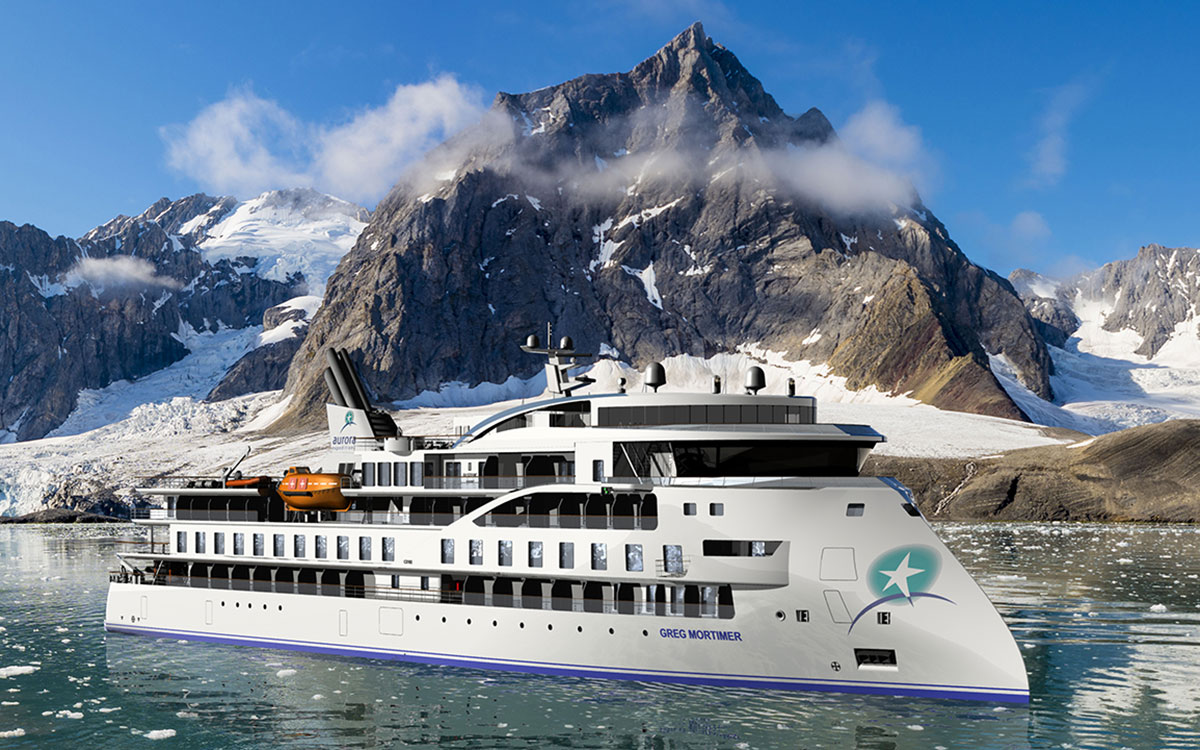
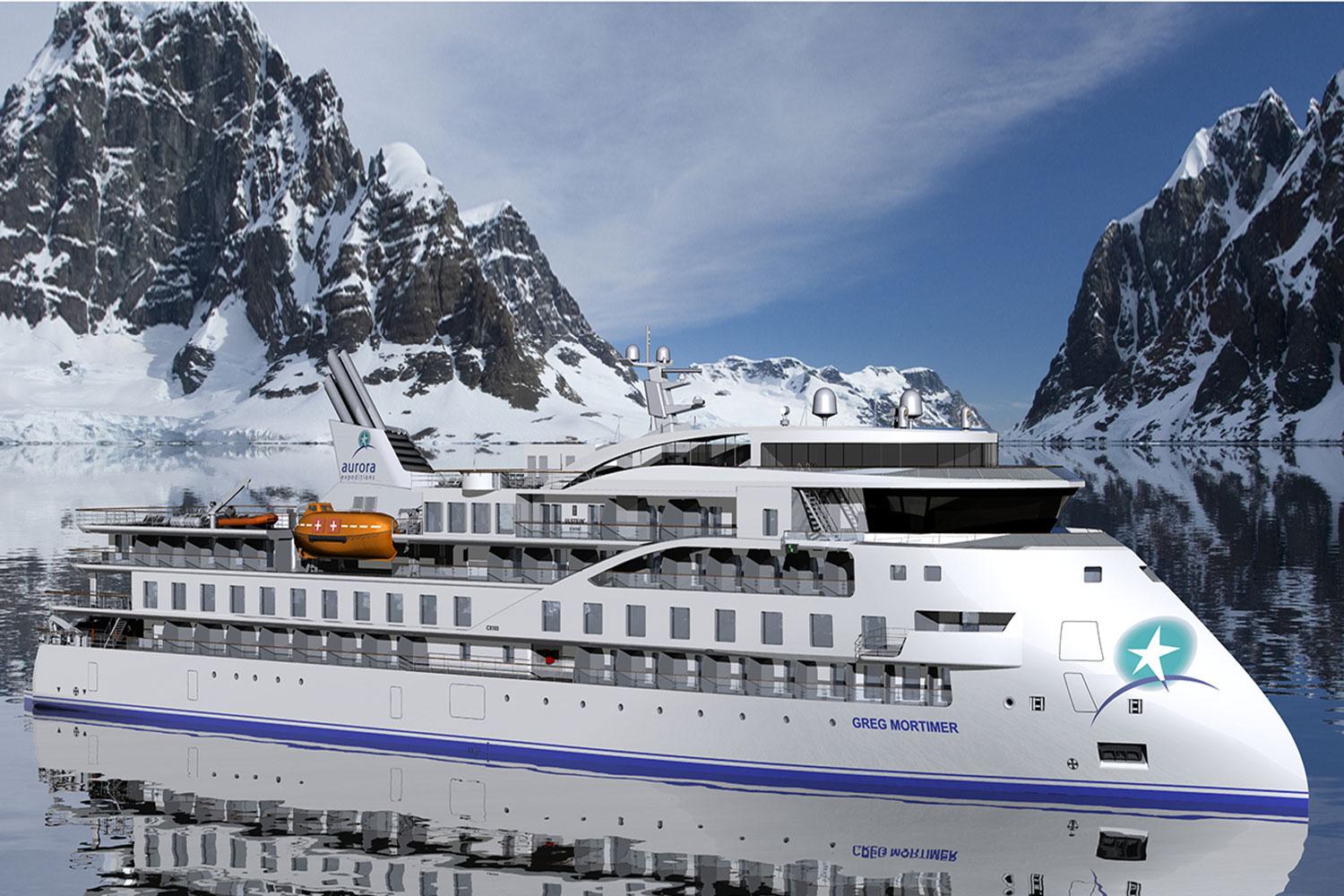
This state-of-the-art 104-metre ship is a purpose-built expedition vessel accommodating a maximum of just 130 passengers per voyage. She operates with a combination of low energy consumption, high fuel-efficiency and a streamlined design. With the revolutionary ULSTEIN X-BOW® to cross oceans more comfortably, expansive observation decks, inviting communal areas and unsurpassed environmental credentials, these ships offer the perfect base camp for adventures at the outer limits of human exploration. Not only can they contend with the most adverse weather conditions, added creature comforts make for a more enjoyable journey out on the open ocean. Zodiac loading platforms and activities platform allows for faster disembarkation from the ship – to get out on your adventure quicker, whether by zodiac or by kayak. You will find indoor lounge areas with floor-to ceiling windows and panoramic views, and multiple open decks with expansive 270-360 degree views. There is no shortage of spaces to take in the majesty of the incredible world outside! On all expeditions you will meet naturalists and local specialists, who offer presentations on their area of expertise to deepen your understanding of the region you’re visiting. Join the team in the lecture theatre for presentations covering topics as broad as history and culture, biology and climate change, but they have one thing in common: they all aim to engage, educate and entertain. From the European Arctic to the depths of Antarctica, and other far-flung destinations in-between, she will make your journey a breeze!
For full information about this vessel click here:
Booking Information
Essential Information
Prices and Share Policy
Prices quoted are per person in US$, based on twin-share. Single occupancy is 1.7 times the twin share price. No single travel fees apply if you are willing to share your cabin (certain cabin categories cabins only). Fuel surcharge may apply in the event of significant fuel price increases. No refund for unused services.
Deposits
Reservations require a deposit of 25% per person at the time you receive a booking confirmation from Expeditions Online. A payment link will be sent to you and this may be paid by major credit card. Bookings within 120 days of departure require full payment.
Final Payments
Balances are due 120 days prior to departure. You will be invoiced at the appropriate time. Balance payments can be made by bank transfer or on request by major credit card, subject to a 2% surcharge.
Cancellations
All requests for cancellation must be received in writing to Expeditions Online. If the cancellation is made 120 days or more prior to the expedition departure date, you will forfeit your Deposit. If cancellation is made less than 120 days prior to the expedition departure date, you will forfeit the full ticket price, (which includes your Deposit), of the expedition. We strongly recommend that you obtain adequate trip cancellation insurance. In the event of cancellation, we will consider any request by you to transfer the Deposit paid towards a subsequent expedition. The decision as to whether or not to agree will be made by the shipping company at its absolute discretion. If agreed, you will be liable to pay a fee of $500 per passenger (in the currency of your expedition) to cover administrative and associated costs and also be any additional price for the subsequent expedition. The transfer of the Deposit is only valid on expeditions that depart within 24 months from the date of the original proposed departure date. Only one transfer of deposit to another expedition is permitted.
Booking Terms
Please read carefully the General Booking Conditions for Expeditions Online. This voyage is operated by Aurora Expeditions and you additionally travel under their terms and conditions as the operator as well as of the Shipping Company/transport carrier. Details will be forwarded to you at the time of booking along with a separate Booking Form
Included
- Airport arrival and departure transfers to/from our group hotel or port on the first day and the final day of your voyage package.
- One night’s hotel accommodation including breakfast, on Day 1.
- Onboard accommodation during voyage, including daily cabin service.
- All meals, snacks, tea, coffee, soft drinks and juices during voyage.
- Beer and house wine with dinner.
- Captain’s Farewell reception including four-course dinner, house cocktails, house beer and wine, non-alcoholic beverages.
- All shore excursions and Zodiac cruises.
- Educational lectures and guiding services provide by Expedition Team.
- Complimentary access to onboard expedition doctor and medical clinic (initial consultation).
- One 3-in-1 waterproof, polar expedition jacket.
- Complimentary use of Muck Boots during the voyage.
- Comprehensive pre-departure information.
- Port surcharges, permits and landing fees.
- Gratuities during excursions and enrichment program for local guides, drivers, venues and local sites.
- Wi-Fi. *Please note we travel to remote regions and therefore the connection can be unreliable.
Excluded
- International or domestic flights – unless specified in the itinerary.
- Transfers – unless specified in the itinerary.
- Airport arrival or departure taxes.
- Passport, visa, reciprocity and vaccination fees and charges.
- Travel insurance or emergency evacuation charges.
- Hotel accommodation and meals – unless specified in the itinerary.
- Optional excursions and optional activity surcharges.
- All items of a personal nature, including but not limited to, alcoholic beverages (outside of dinner service), on board gratuities*, laundry services, personal clothing, medical expenses, email or phone charges.
- *A $15 USD per person per day gratuity for the crew is automatically added to your onboard account. It is at your discretion if you would like to remove the tip (or adjust the amount) when you settle your bill. It is not necessary to tip the expedition team members. This gratuity amount is included for suites as part of their ‘Suite Benefits’.

Tour Dossier
Ross Sea Odyssey: Greg Mortimer
Journey to Antarctica's remote Ross Sea on an epic expedition, exploring historic sites, vast ice shelves, mountains and rich wildlife
File Creation date: 2026-10-14 - for updated information and dates and prices see the following page:
http://expeditionsonline.com/tour/ross-sea-odyssey-greg-mortimer_290
Ross Sea Odyssey: Greg Mortimer
Duration: 26 days
Location: Antarctic Peninsula
Available: December-January
Start: Hobart, Tasmania
Finish: Dunedin, New Zealand
Highlights
- Skirt rowdy beaches crowded with harems of New Zealand sea lions to reach rata forests where rare yellow-eyed penguins can be found.
- Revel in the richness of the unique Ross Sea ecosystem
- Navigate through gleaming pack ice alive with Weddell and leopard seals, Adélie and emperor penguins and whales feeding in fathomless leads.
- Reflect on the remarkable achievements of the heroic age explorers as we attempt to visit some of their beautifully preserved historic huts (conditions permitting).
Itinerary
Experience one of the most remote, historic sectors of the deep South in comfort on this exploratory expedition aboard the luxurious Greg Mortimer. Your journey begins in the subantarctic, where yellow-eyed penguins waddle through wizened rātā forests and royal albatross nest amid megaherb moors. Cross the Antarctic Circle and cruise the pack, keeping watch for emperor and Adélie penguins porpoising along the ice edge, orcas patrolling for prey, and snow petrels soaring against a backdrop of the vast Antarctic Ice Sheet
Ship Information
Expedition Vessel: Greg Mortimer
This state-of-the-art 104-metre ship is a purpose-built expedition vessel accommodating a maximum of just 130 passengers per voyage. She operates with a combination of low energy consumption, high fuel-efficiency and a streamlined design. With the revolutionary ULSTEIN X-BOW® to cross oceans more comfortably, expansive observation decks, inviting communal areas and unsurpassed environmental credentials, these ships offer the perfect base camp for adventures at the outer limits of human exploration. Not only can they contend with the most adverse weather conditions, added creature comforts make for a more enjoyable journey out on the open ocean. Zodiac loading platforms and activities platform allows for faster disembarkation from the ship – to get out on your adventure quicker, whether by zodiac or by kayak. You will find indoor lounge areas with floor-to ceiling windows and panoramic views, and multiple open decks with expansive 270-360 degree views. There is no shortage of spaces to take in the majesty of the incredible world outside! On all expeditions you will meet naturalists and local specialists, who offer presentations on their area of expertise to deepen your understanding of the region you’re visiting. Join the team in the lecture theatre for presentations covering topics as broad as history and culture, biology and climate change, but they have one thing in common: they all aim to engage, educate and entertain. From the European Arctic to the depths of Antarctica, and other far-flung destinations in-between, she will make your journey a breeze!
For full information about this vessel click here:
Ross Sea Odyssey: Greg Mortimer
For the latest, up-to-date departure dates and prices please refer to the tour page:
http://expeditionsonline.com/tour/ross-sea-odyssey-greg-mortimer_290
Included
- Airport arrival and departure transfers to/from our group hotel or port on the first day and the final day of your voyage package.
- One night’s hotel accommodation including breakfast, on Day 1.
- Onboard accommodation during voyage, including daily cabin service.
- All meals, snacks, tea, coffee, soft drinks and juices during voyage.
- Beer and house wine with dinner.
- Captain’s Farewell reception including four-course dinner, house cocktails, house beer and wine, non-alcoholic beverages.
- All shore excursions and Zodiac cruises.
- Educational lectures and guiding services provide by Expedition Team.
- Complimentary access to onboard expedition doctor and medical clinic (initial consultation).
- One 3-in-1 waterproof, polar expedition jacket.
- Complimentary use of Muck Boots during the voyage.
- Comprehensive pre-departure information.
- Port surcharges, permits and landing fees.
- Gratuities during excursions and enrichment program for local guides, drivers, venues and local sites.
- Wi-Fi. *Please note we travel to remote regions and therefore the connection can be unreliable.
Excluded
- International or domestic flights – unless specified in the itinerary.
- Transfers – unless specified in the itinerary.
- Airport arrival or departure taxes.
- Passport, visa, reciprocity and vaccination fees and charges.
- Travel insurance or emergency evacuation charges.
- Hotel accommodation and meals – unless specified in the itinerary.
- Optional excursions and optional activity surcharges.
- All items of a personal nature, including but not limited to, alcoholic beverages (outside of dinner service), on board gratuities*, laundry services, personal clothing, medical expenses, email or phone charges.
- *A $15 USD per person per day gratuity for the crew is automatically added to your onboard account. It is at your discretion if you would like to remove the tip (or adjust the amount) when you settle your bill. It is not necessary to tip the expedition team members. This gratuity amount is included for suites as part of their ‘Suite Benefits’.
General Terms and Conditions
BOOKING ENQUIRIES:
Expeditions Online Newsletter
Sign up to be an Expeditions Online insider and receive info on exclusive deals, discounts and more!